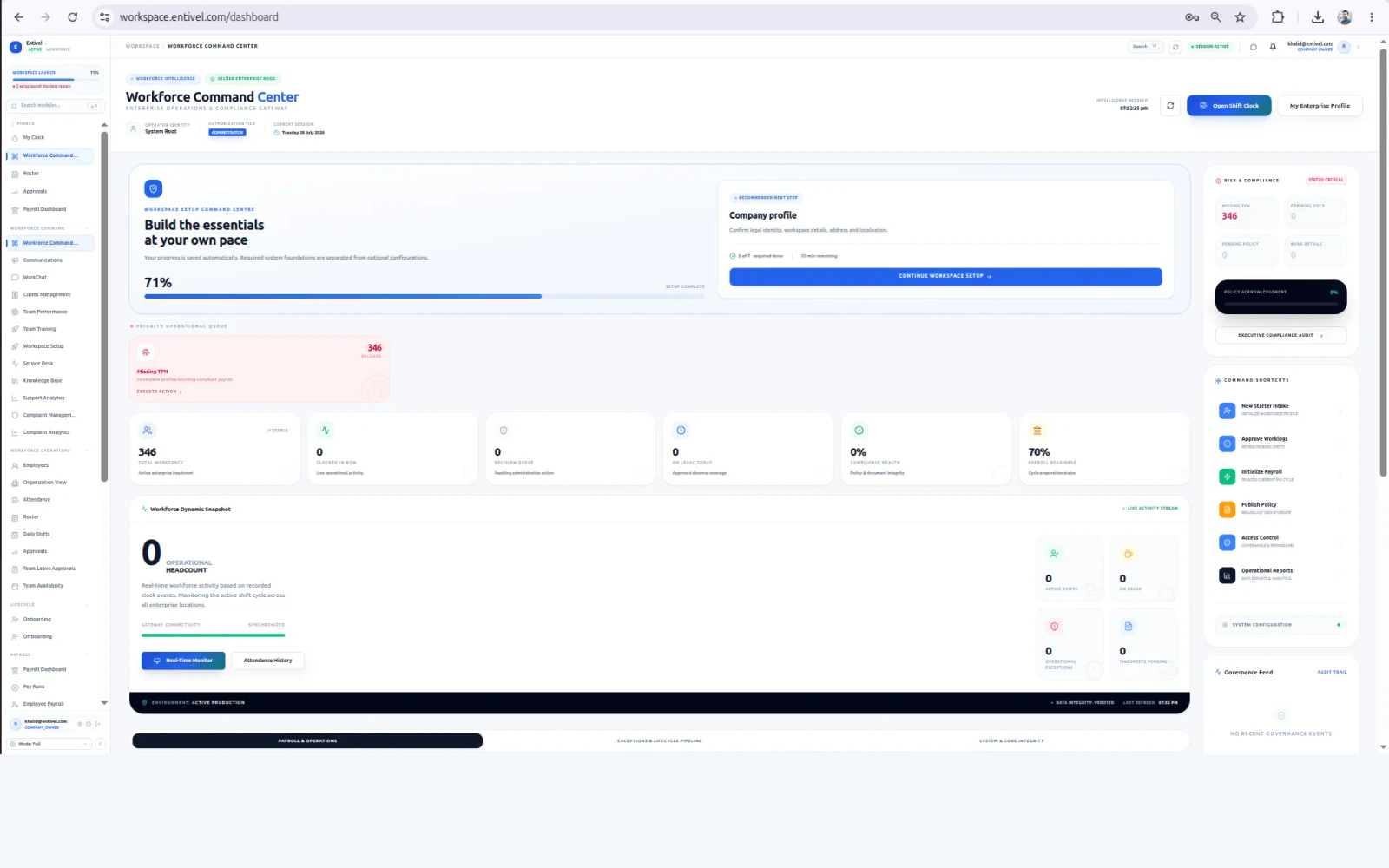
Beyond HR software
Workforce is one connected product inside a wider enterprise operating system.
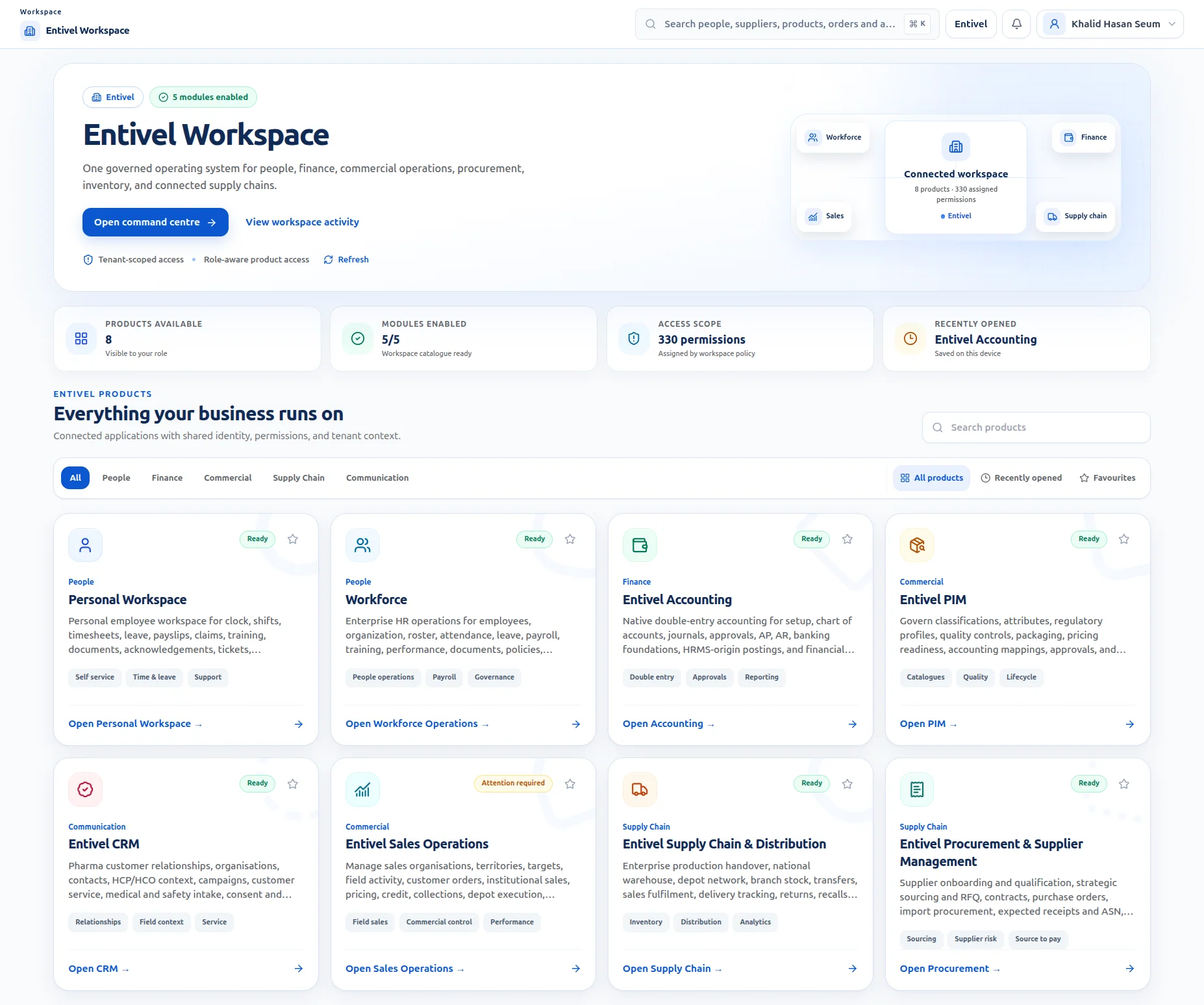
Entivel Workspace
Entivel Workspace connects people, finance, products, customers, suppliers, procurement, production, inventory, warehouses, distribution and governance through one shared operating context.
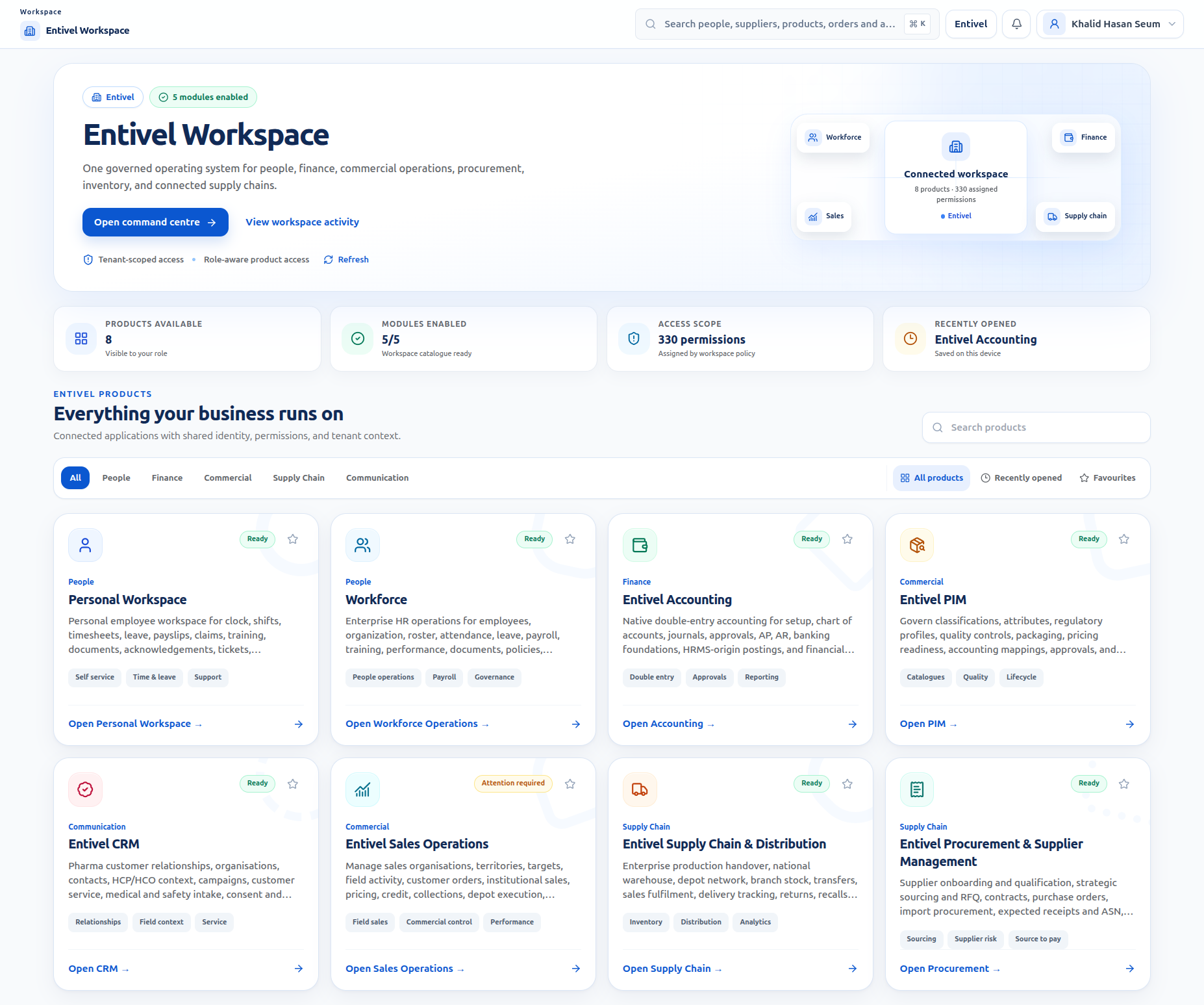
More than another business application
Traditional systems separate HR, accounting, product data, suppliers, customers, purchasing, stock and reporting. Teams recreate the same information, reconcile different answers and wait for approvals that have lost their operating context.
Entivel Workspace creates one governed foundation beneath those domains. A supplier qualification can inform purchasing. A receipt can update inventory. A fulfilled order can create financial context. A workforce decision can remain connected to the location, role, approval and operational need behind it.
Workforce is one connected product inside a wider enterprise operating system.
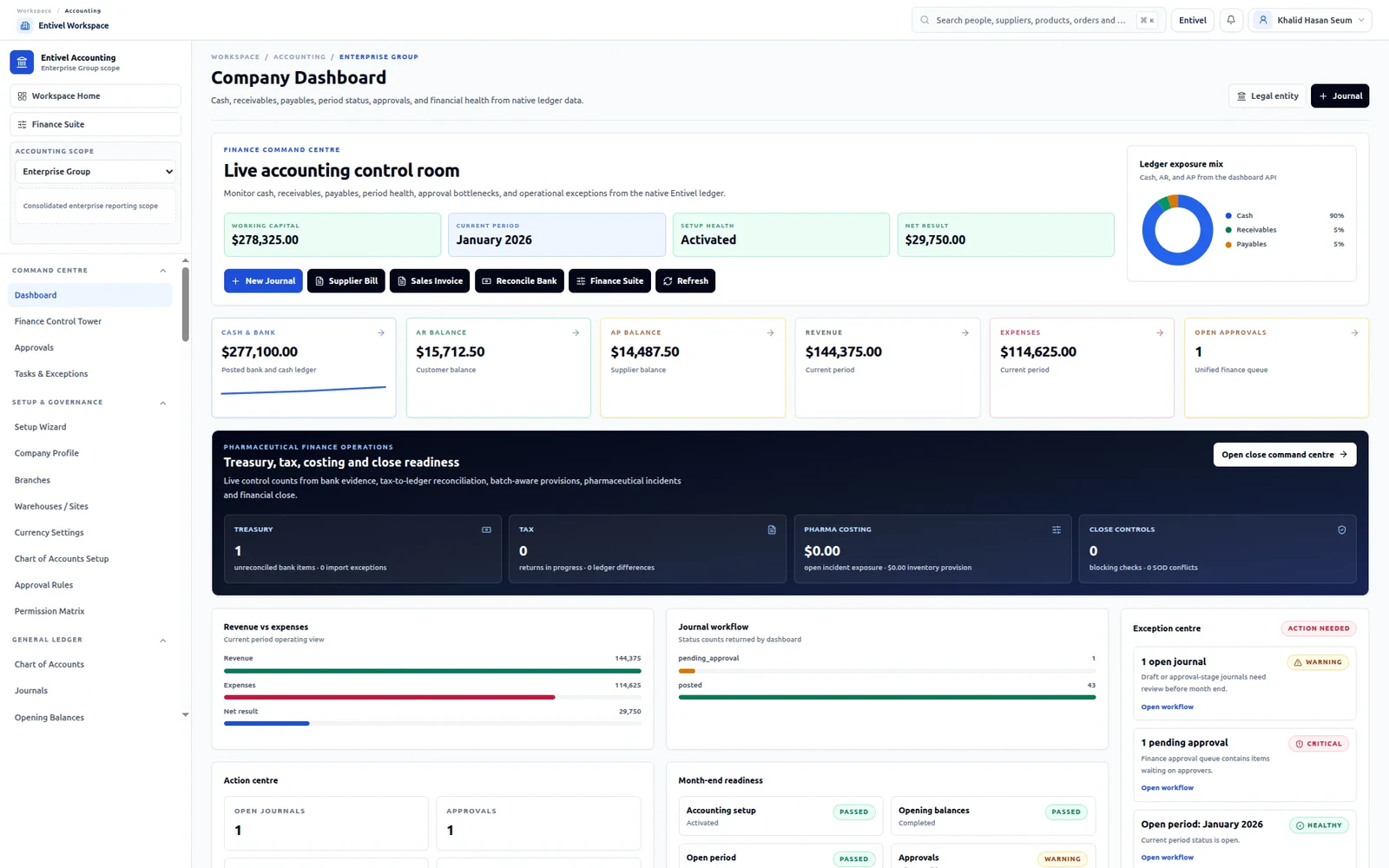
Financial control receives operational context from purchasing, inventory, sales and workforce events.
Planning, production, quality, warehousing, fulfilment, returns and recalls remain part of the same record.
What connection changes in practice
These are the kinds of cross-team controls Workspace is designed to support. Exact workflows and rules are configured during implementation.
Reserve only available stock, attach warehouse and delivery evidence, then create financial context from what was actually fulfilled.
Trace raw material, production, release, warehouse custody and customer exposure through the same product and batch context.
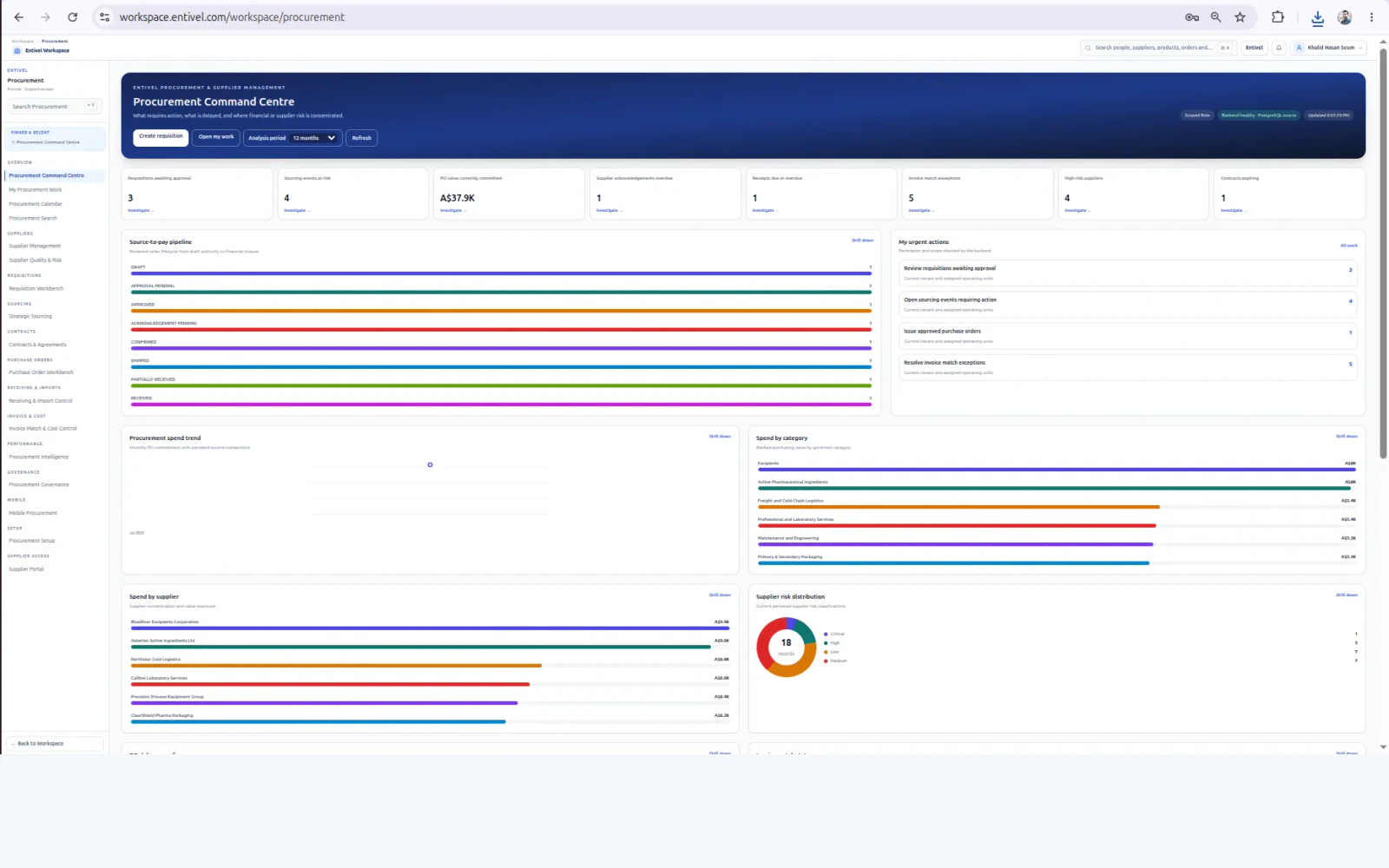
Connect requisition, approval, supplier selection, receipt, invoice match and payment responsibility.
Bring roster, leave, attendance, exceptions, approved time and labour visibility into one controlled cycle.
Governed enterprise records
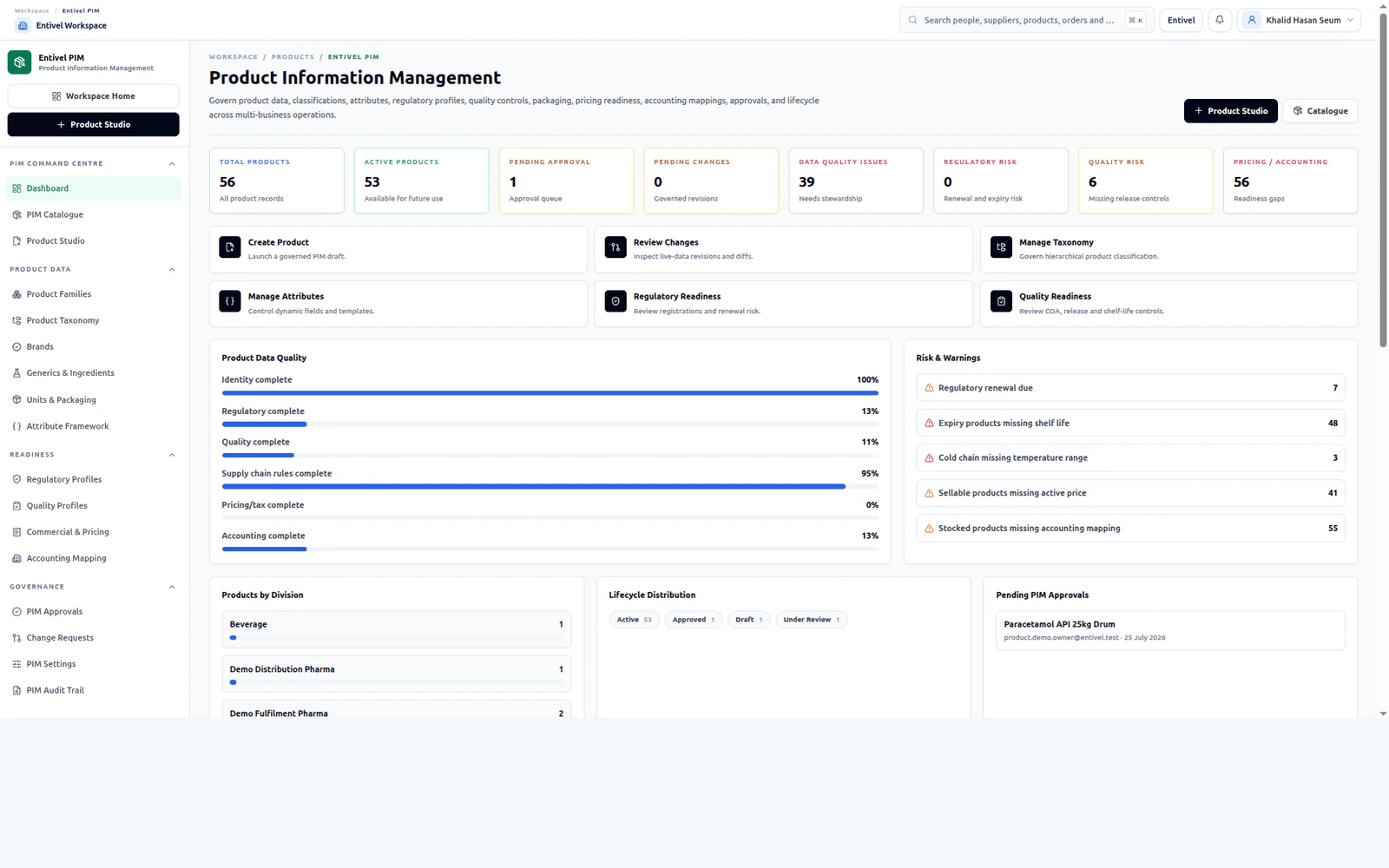
Every product area works with the same governed organisational and commercial records. Teams stop rebuilding the same employee, product, supplier, customer and location data inside isolated tools.
Explore platform administrationProduct architecture
Entivel Workspace is not a loose collection of dashboards. Identity, tenant context, roles, permissions, approvals and operational records connect every product domain.
Define people, financial control and governed product information before work moves between teams.
The complete employee lifecycle, rostering, attendance, leave, payroll readiness, learning, performance and communication.
Multi-entity accounting, general ledger, receivables, payables, banking, assets, budgets, tax and period control.
A governed source of truth for product identity, variants, packaging, pricing, quality, regulatory data and lifecycle.
Turn demand, scenarios and purchasing requirements into approved supply decisions.
Demand forecasts, replenishment, allocation, material planning, supply reviews and operational scenario modelling.
Requisitions, quotations, supplier selection, purchase orders, receiving, three-way matching and spend visibility.
Coordinate production, inventory custody and quality decisions around the same product and batch context.
Production plans, material control, batch manufacturing, in-process checks, packaging, quality release and genealogy.
Immutable stock movements, batch and expiry tracking, reservations, quality status, valuation and network visibility.
Quality holds, quarantine, inspections, deviations, corrective actions, release decisions, recalls and evidence.
Connect warehouse execution, distribution and customer operations from order acceptance to service.
Receiving, putaway, mobile scanning, transfers, picking, packing, dispatch, delivery, returns, recalls and cold chain.
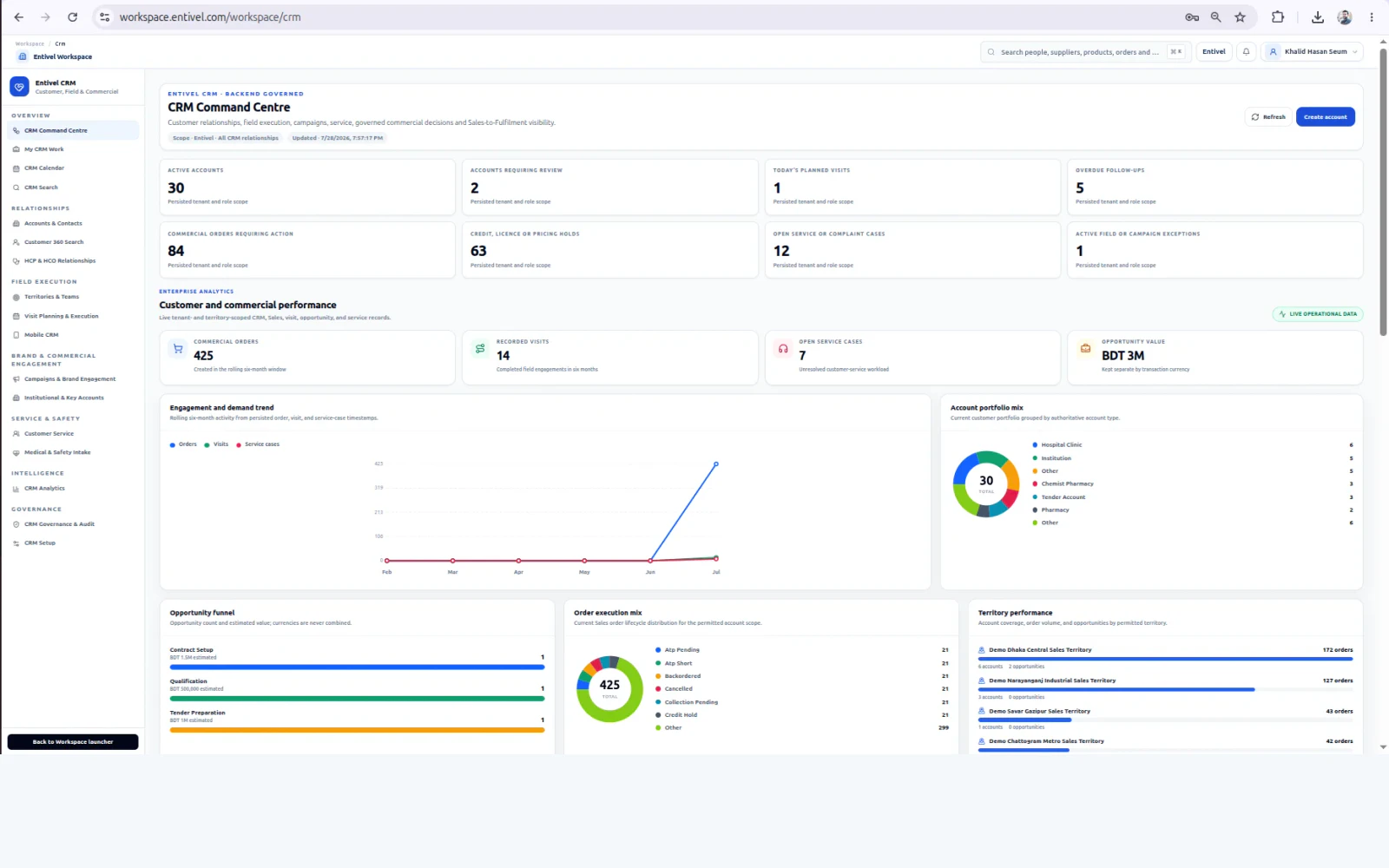
Customer records, field teams, pricing, credit, sales orders, fulfilment, delivery, invoicing, returns and service.
Give leaders and administrators the reporting, exceptions, permissions and audit evidence needed to act.
Organisation-wide indicators, exceptions, action queues and drill-down investigation across every operating domain.
Role-based reporting, alerts, Action Centre, users, permissions, workflows, audit logs and tenant configuration.
Rules beneath the workflow
Legal entities, locations, roles and commercial relationships do not need to be reconstructed by every team. They follow the work into approvals, movements, documents, financial entries and reporting.
Model legal entities, business units, brands, branches, departments, teams, positions, employees and operating locations once.
Keep customers, suppliers, products, units, currencies, tax context and commercial terms connected to the work they govern.
Create a continuous record across plans, requests, approvals, orders, receipts, inventory movements, fulfilment and financial events.
Apply identity, role permissions, approval rules, documents, notifications and audit evidence through the same enterprise context.
From intent to outcome
Workspace connects the business process from planning to financial control. Records, permissions and evidence move through the operation instead of disappearing between separate applications.
Demand, workforce, materials and scenario planning create the shared operating intent.
Supplier qualification, contracts, purchasing and receiving protect supply readiness.
Production, warehouse, inventory and quality teams execute from governed records.
CRM, sales, fulfilment, delivery and support keep the customer promise visible.
Accounting, approvals, audit evidence and analytics close the loop with operational truth.
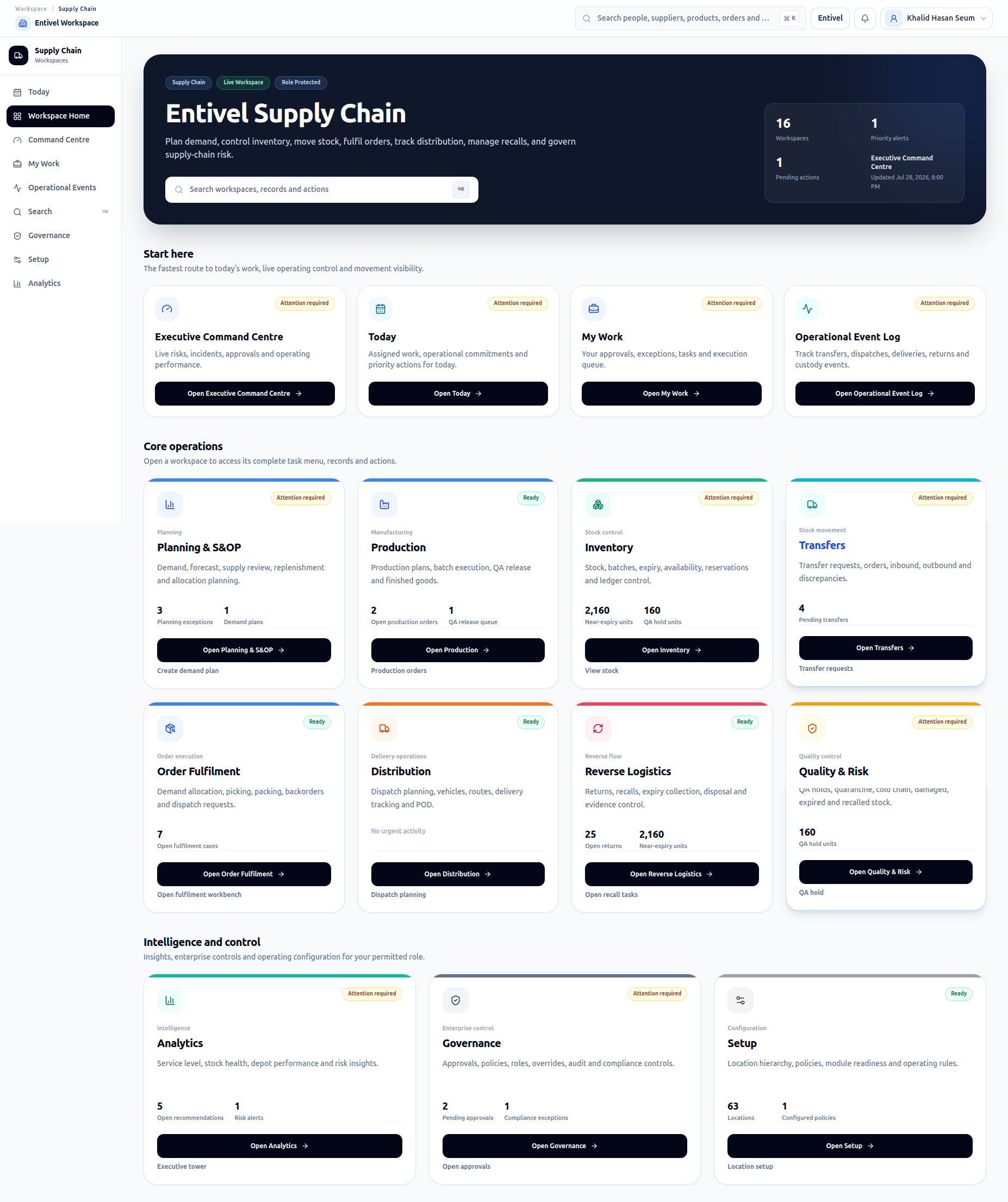
Real product structure
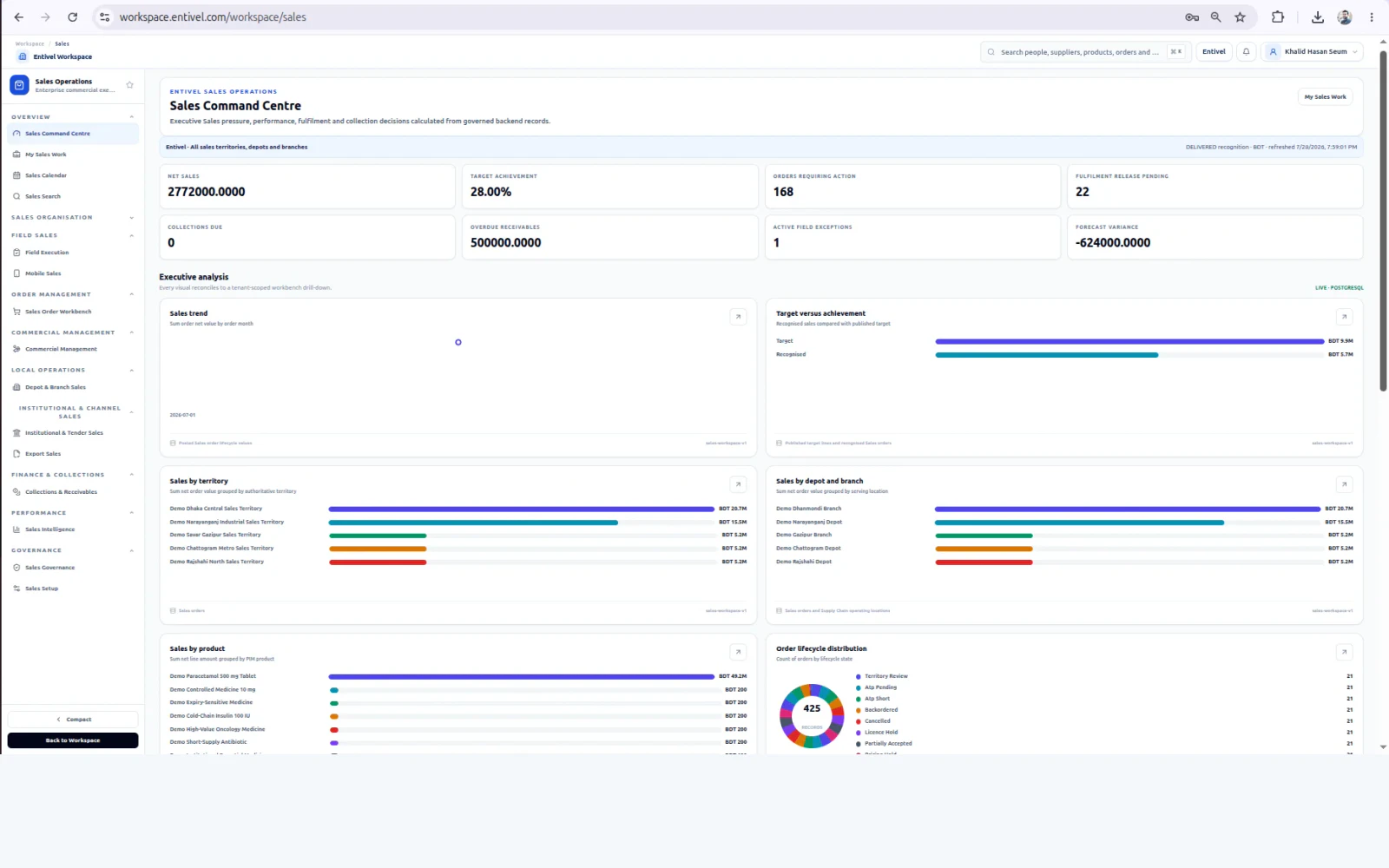
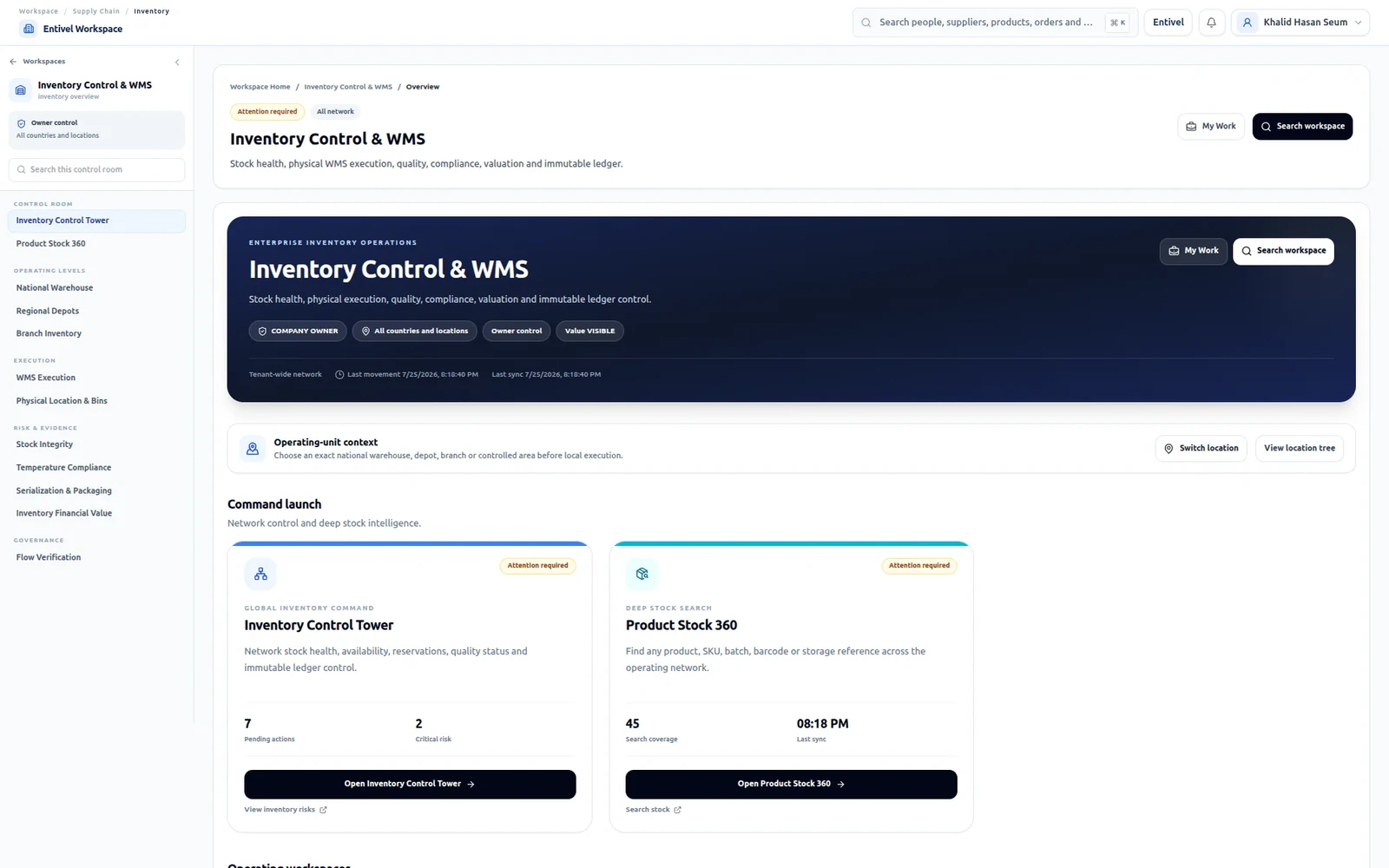
The product frame stays in place while the page reveals the complete Supply Chain workspace from its launcher through specialist planning, inventory, production and distribution work.
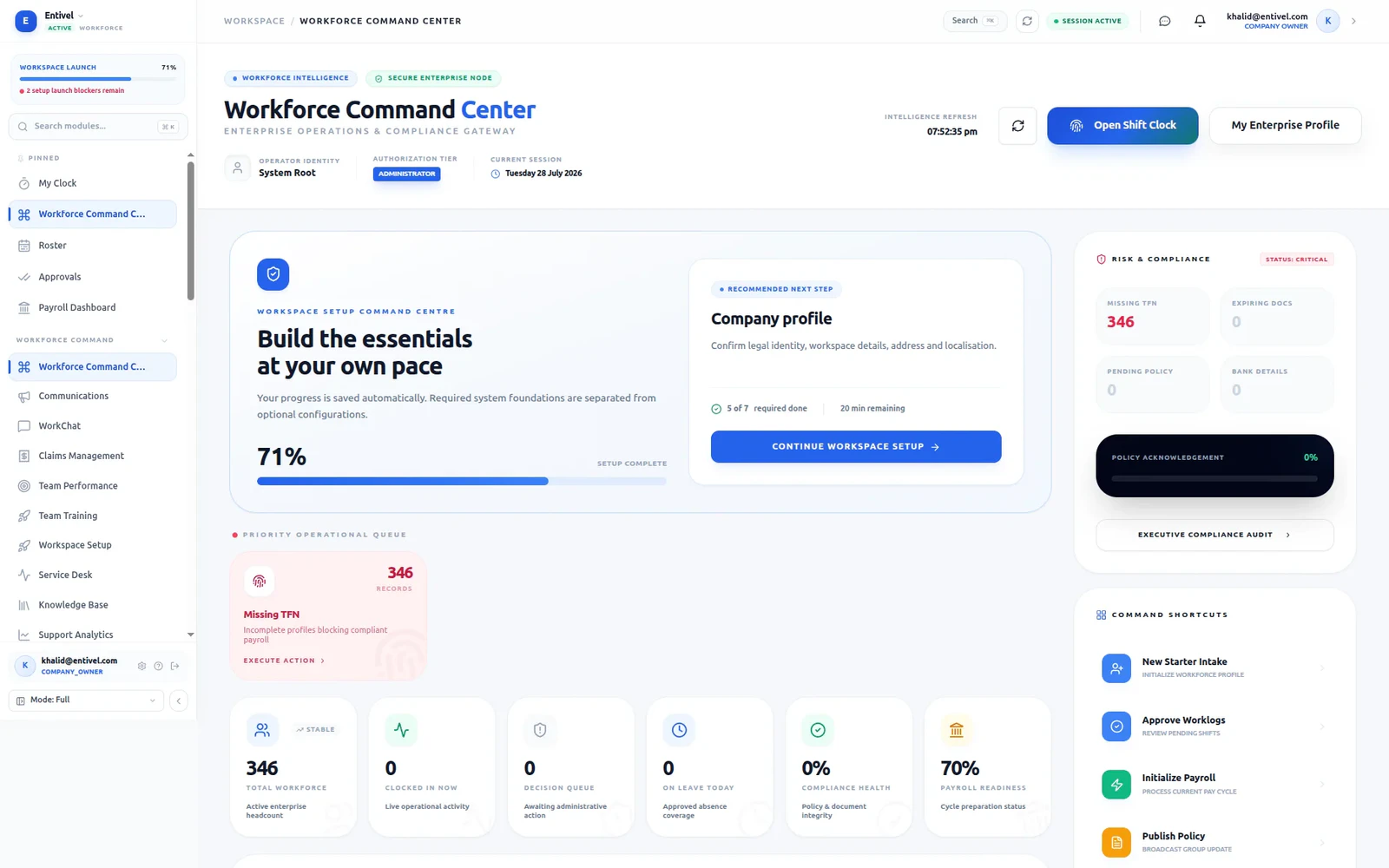
Real Workspace interfaces
Move through the real interfaces behind each operating domain. Every view stays aligned in one fixed product stage so the software remains clear, stable and easy to compare.
Workspace trust architecture
Workspace applies a shared identity and control model across workforce, finance, procurement, production, inventory, customer operations and administration.
Explore Entivel securityPermissions can follow tenant, legal entity, branch, warehouse, department and the user’s operational responsibility.
Sensitive purchasing, financial, inventory, quality and configuration actions can require separation and approval.
Posted events can follow controlled correction or reversal paths instead of silently changing operational history.
Identity, previous and new state, approval context, documents and related records can remain connected across modules.
Exact controls, infrastructure, data residency and deployment requirements are confirmed during discovery. Entivel does not claim certifications that have not been independently established.
Adopt without losing the destination
Workspace supports a phased product journey. The first release can stay focused while identity, data, governance and integration decisions protect the wider enterprise roadmap.
Begin with Workforce, Accounting, Procurement, Product Intelligence, CRM or Supply Chain while preserving the path to a connected platform.
Connect a complete process such as source to pay, order to cash, shift to payroll readiness or plan to production.
Establish the organisation, identity, permissions, master data and control model before bringing more teams into the platform.
Grow through business units, locations, warehouses and operating entities with a governed model that supports local configuration.
Make the enterprise visible
Entivel Workspace can begin with one product domain and expand on a shared foundation.
Talk to Entivel