
The pace of digital transformation has never been faster, making the adoption of advanced cloud platforms essential for global growth. Yet, with every new feature and service deployed, a corresponding increase in complexity,and risk,emerges. When industry leaders like Google Cloud announce major shifts toward AI-powered security, it is not merely an upgrade; it signals a fundamental change in how businesses must approach their most critical digital assets.
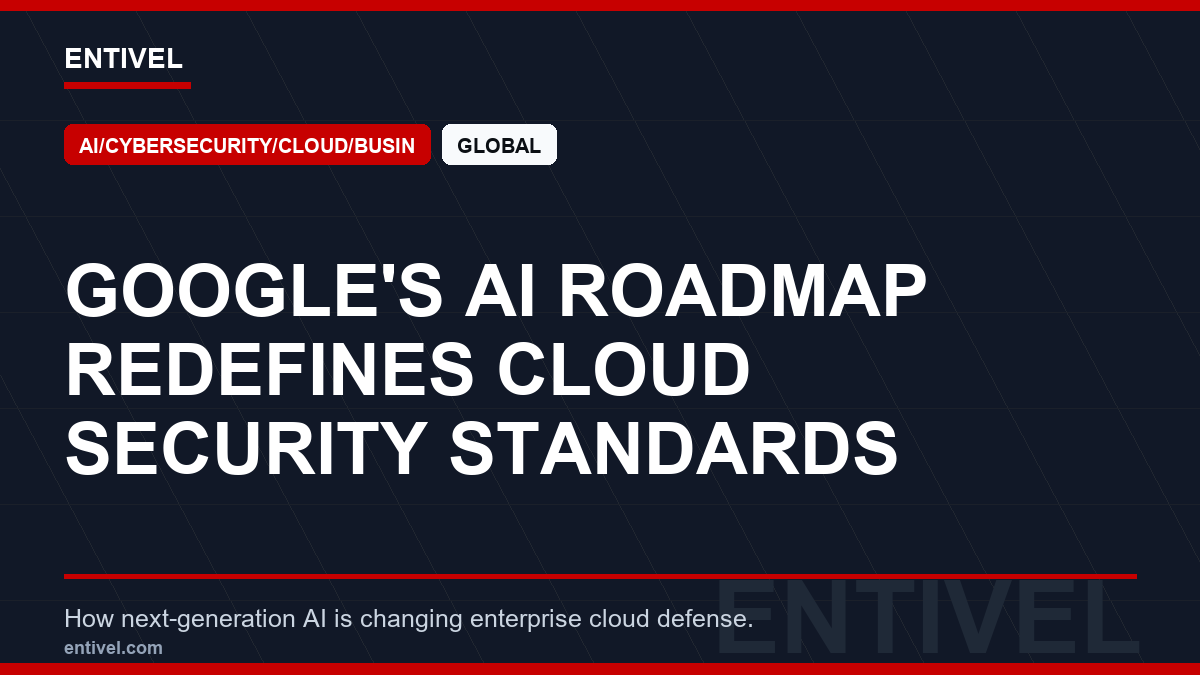
TL;DR: Google Cloud's roadmap emphasizes that traditional perimeter defenses are obsolete. Future cloud security for business relies heavily on AI to detect anomalies, manage identities seamlessly (Zero Trust), and provide continuous risk monitoring. Businesses must move from reactive patching to proactive, intelligent cloud risk management to mitigate exposure.
The Shift: Why Human Defense Is No Longer Enough
Google Cloud’s CEO outlined a comprehensive vision where Artificial Intelligence is integrated into the core of security architecture. This isn't about adding another layer of monitoring; it’s about embedding intelligence at every point of access and data flow. The underlying message to international businesses is clear: the threat landscape has reached an unprecedented scale, outpacing human ability to manually detect all vulnerabilities.
Modern attacks are not brute force; they are sophisticated, subtle, and highly targeted,often exploiting weak points in identity management or misconfigurations within complex cloud environments. This makes robust cloud security for business a necessity, not an option.
Understanding the Business Imperative: How Cloud Security Affects Companies
When we talk about AI-powered security, we are talking about moving from simple compliance checklists to genuine operational resilience. The shift fundamentally changes how cloud security for business affects companies in three critical ways:
- From Reactive to Predictive: Instead of waiting for a breach (a reactive stance), AI allows platforms to predict when and how an account might be compromised, providing pre-breach alerts.
- The Identity Crisis: The most valuable target today is not the firewall, but the user identity itself. Poor identity and access control remains one of the largest gaps in global enterprise security, regardless of whether you use Microsoft 365 or another cloud platform.
- Complexity Management: As organizations adopt hybrid and multi-cloud setups, visibility becomes fragmented. AI centralizes this view, allowing for a comprehensive cloud exposure assessment across disparate systems.
Pillars of Advanced Cloud Security
To secure a modern digital enterprise, the focus must be on continuous verification and adaptive controls. Key areas highlighted by industry leaders include:
- Zero Trust Architecture: Never trust, always verify. Every user, device, and application attempting to access data,internal or external,must be authenticated and authorized dynamically.
- Behavioral Analytics: AI monitors baseline behavior. If an employee suddenly accesses a massive volume of client records at 3 AM from an unusual location, the system flags it immediately, regardless of whether the credentials were valid.
- Automated Remediation: The goal is speed. When a threat is detected, the response must be instantaneous,isolating the resource or revoking access before human intervention is needed.
Practical Tips by Category
Implementing advanced security requires expertise across multiple domains. Here are actionable steps businesses can take to improve their posture:
Cybersecurity Tips
- Implement Multi-Factor Authentication (MFA) universally, especially for administrative accounts.
- Regularly audit access permissions to ensure the principle of least privilege is enforced across all applications.
Cloud Tips
- Adopt a cloud security posture management (CSPM) tool to continuously monitor for misconfigurations and cloud risk management gaps.
- Ensure your architecture supports granular network segmentation, limiting lateral movement if an attacker gains initial access.
AI Tips
- Start small by using AI-powered threat intelligence feeds to analyze known attack vectors relevant to your industry.
- Utilize AI automation for routine security tasks (e.g., vulnerability scanning) freeing up human experts for complex incident response.
Business Technology Tips
- Treat security expenditure not as a cost center, but as an investment in business continuity and reputation protection.
- Standardize your cloud tool stack to reduce complexity and improve visibility across the entire digital footprint.
Entivel Perspective: Turning This Into Safer Growth
The shift toward AI-powered defense is inevitable, but it does not mean that securing a complex environment is out of reach. It means adopting a holistic, intelligent strategy.
At Entivel, we understand that global businesses require more than just technology; they need integrated risk intelligence. Our approach combines advanced software automation with deep expertise in cybersecurity and AI to provide the necessary layer of protection across your digital estate. We help international firms move beyond simple compliance checks to achieve true operational resilience.
If you are questioning where your current cloud security for business efforts stand, or if you need expert guidance on implementing Zero Trust principles and comprehensive cloud risk management programs, we can assist with a thorough review of your infrastructure. Don't wait for an incident to validate your security strategy.
Ready to fortify your digital defenses?
Explore how Entivel’s AI automation and cybersecurity solutions can guide your path toward a truly secure cloud setup. Visit our website today to learn more about building resilient, growth-focused technology systems.
Learn More About Enterprise Security Solutions: Visit Entivel.com
How Entivel can help
Entivel helps businesses review website security, access control, cloud exposure and software risk before small issues become expensive incidents. Learn more at https://entivel.com.