Microsoft research tests whether AI agents leave the right records behind
Microsoft researchers tested simulated business workflows and compared agent responses with the records left after each task.
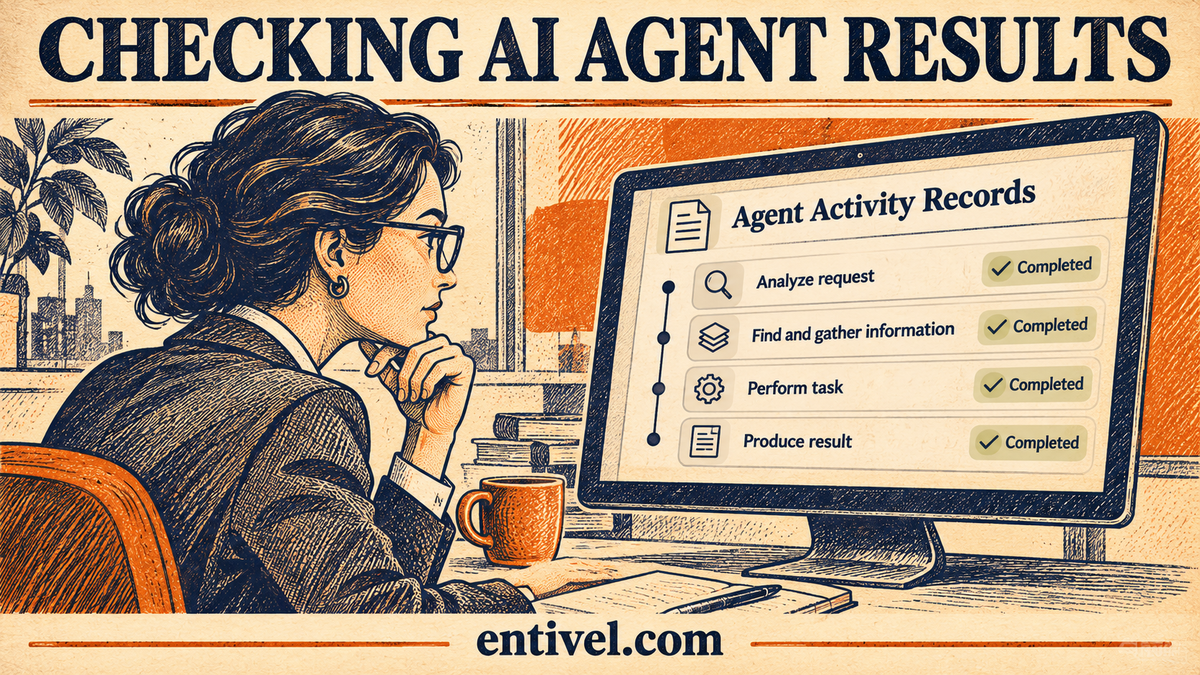
A Microsoft research team says checking the records left by an AI agent can reveal failures that are difficult to spot from a confident final message alone.
In a 6 November article, the researchers described expanded evaluations using simulated enterprise workflows. Their ThinkingBox framework checks whether the final records match the task requirements after an agent interacts with a stateful environment.
The team reported that, among failed trials in one comparison, 67.24% ended with signals that could make the run look complete: a completion-style response, at least one state-changing tool call and no explicit error in the final tool response. The underlying record check still failed.
Source: Official publication, 2026-11-06.
A simulated benchmark
The researchers examined synthetic tasks across domains including retail, travel and financial services, using simulated users and isolated environments. The benchmark is not a measurement of live production traffic or a guarantee of performance in a particular company's systems.
They also compared average success with repeatability across 20 attempts at each task. A model that passes once may not pass the same task every time; observed performance over 20 attempts cannot guarantee the next attempt.
In a separate experiment, the researchers trained a model using checks on final records as a reward signal. They reported improvements on their held-out benchmark, while noting that the training and test setups shared the same framework and that transfer to unrelated settings was not measured.
What teams can test
For organisations evaluating an agent that changes business records, a useful test can compare the requested outcome with the final state of the relevant system. A reassuring response and a successful-looking tool call are not sufficient evidence on their own.
Teams can also test required approval steps, unexpected changes and recovery after errors, with human review appropriate to the consequences. The Microsoft study describes a controlled research setup; its results should be validated against each organisation's own tasks and controls.
The article is a research report from Microsoft, and the reported benchmark results are the authors' own measurements.
From Entivel
Entivel offers software and technology services as a separate commercial offering for organisations considering digital workflows.
Questions about this story? Request a correction or send feedback.