Bangladesh cyber advisory points to ransomware risks beyond desktop computers
A July CIRT advisory describes cross-platform ransomware tooling; teams can review server inventories and recovery plans without assuming a local compromise.
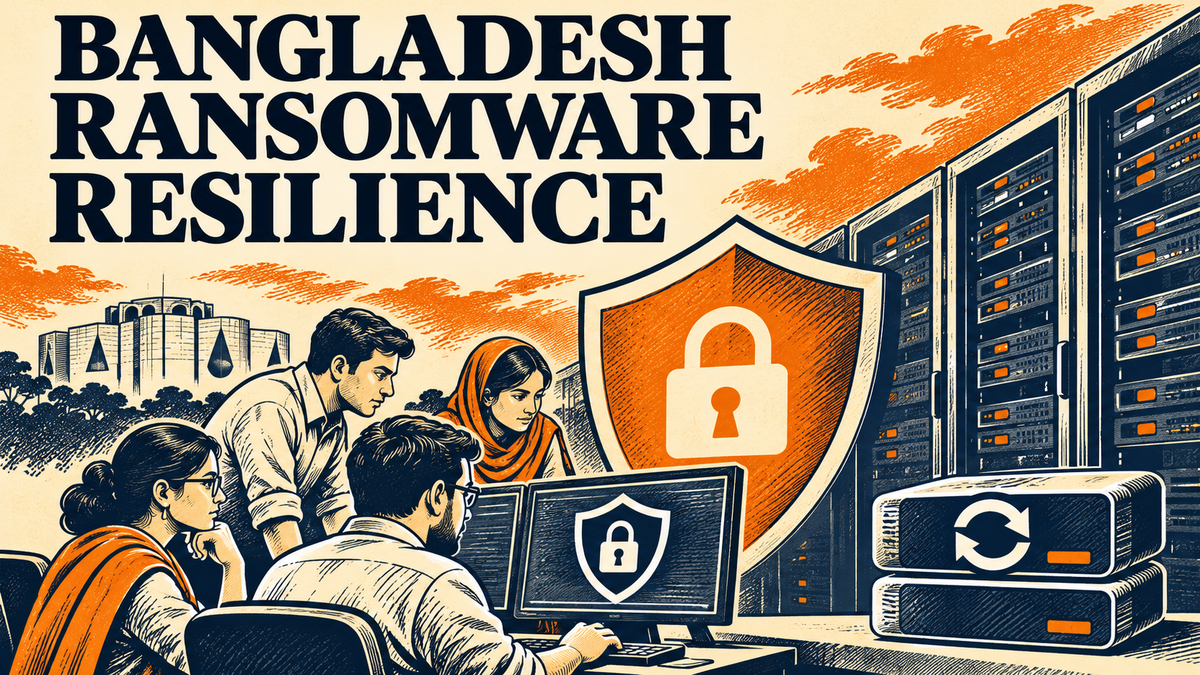
A Bangladesh cyber advisory published on 5 July described ransomware tooling capable of targeting a range of enterprise systems, underscoring why recovery plans need to account for servers as well as desktop computers.
BGD e-GOV CIRT said its analysis of publicly available threat intelligence identified INC ransomware payloads for Windows, Linux, VMware ESXi and several processor architectures. It reported no confirmed Bangladesh victims at the time of that publication; the advisory does not establish a specific local incident now.
The agency described exposed infrastructure containing deployment scripts, reconnaissance material, credential-related artefacts and tools for taking data. The analysis is a dated account of observed material, not evidence that every organisation faces the same attack path.
Source: Official publication, 2026-07-05.
Recovery depends on more than files
If an organisation relies on virtual machines, identity services or older enterprise systems, its recovery plan needs to identify the systems and dependencies required to restart operations. A backup of a document alone may not restore the application, credentials and configuration needed to use it.
Australia’s cyber security agency recommends retaining backups appropriate to business continuity requirements and limiting who can modify or delete them. Teams can also test restoration and make sure recovery access does not depend entirely on the same systems that could be disrupted.
Backups are one part of resilience. Inventorying exposed services, applying security updates and protecting privileged accounts can reduce opportunities for attackers; none of these measures guarantees prevention.
How to interpret the warning
CIRT’s July analysis concerned an INC campaign across the Asia-Pacific region. Its finding of no confirmed Bangladesh victims applied at publication and should not be read as an ongoing count. The separate Australian guidance concerns general backup controls, not a claim that this particular campaign compromised a particular organisation.
Security teams should assess their own environment, consult current advisories and use their incident response plan when they identify suspicious activity. Third-party service providers may need to participate where they operate servers or backups.
From Entivel
Entivel offers cybersecurity engineering as a separate commercial service for organisations reviewing digital infrastructure.
Explore the Entivel offering or contact Entivel.
Further reading: Australian Cyber Security Centre system management guidelines.
Questions about this story? Request a correction or send feedback.