Fake AI service notices give Bangladesh teams a reason to check billing requests
A July Bangladesh CIRT advisory describes AI-branded phishing and fake downloads. The lasting lesson is to verify requests through known channels.
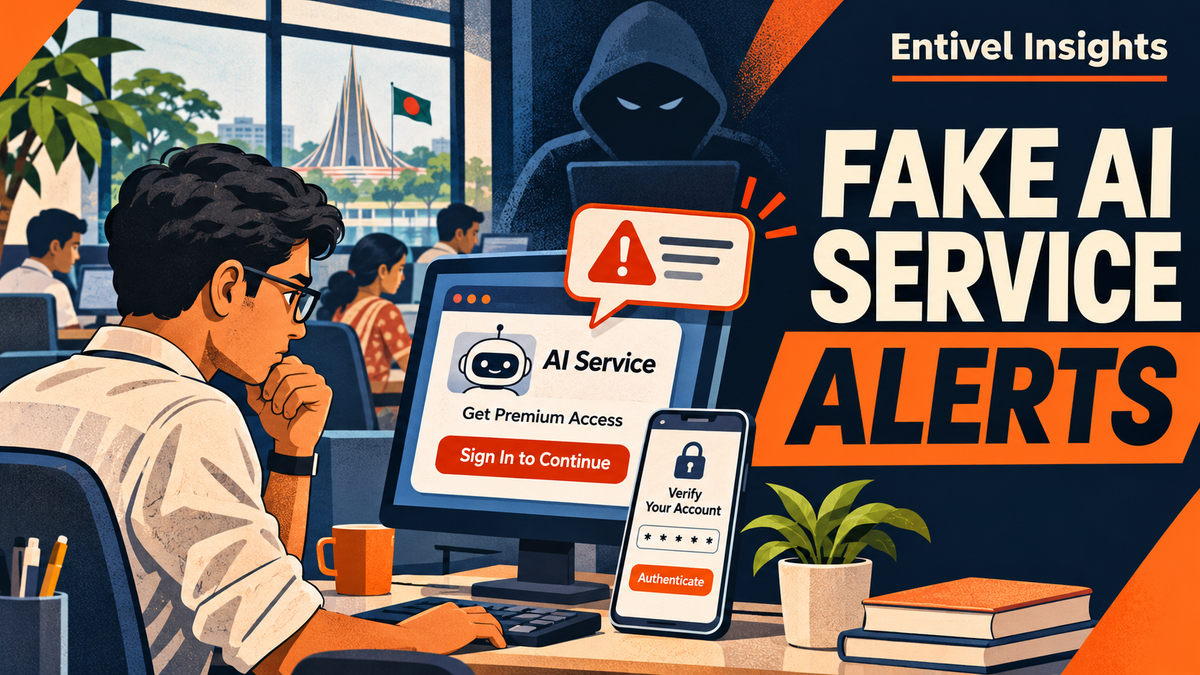
An unexpected notice about an AI account can be a prompt to pause, not a reason to enter payment details immediately. A Bangladesh CIRT advisory published on 9 July described phishing and malware campaigns that used familiar AI service branding as a lure.
The advisory discussed campaigns reported by Microsoft, including fake billing requests and malicious download pages. It describes impersonation of service brands; it does not establish that the legitimate services themselves were breached.
The examples were observed across different places and periods. The advisory explains why similar tactics could affect users in Bangladesh, but it does not establish that every example targeted a Bangladeshi organisation.
Source: Official publication, 2026-07-09.
Check the request independently
A message that claims an account will be suspended can create pressure to act before a recipient checks its origin. A safer workflow is to navigate to the service using an existing bookmark or known address and review account notices there instead of following an unexpected link.
For a company account, employees should know who owns the subscription and which team approves billing changes. A finance colleague can verify a payment request with that owner using a contact method already on file. The sender’s display name or a familiar logo alone does not prove the message is authentic.
Treat downloads as a separate decision
The CIRT advisory also describes fake software pages and repositories. A software team can keep an approved list of vendors and distribution locations, check the publisher and validate the request through its normal software review process before an installer is run.
Even legitimate hosting platforms can contain material from many different publishers. A repository’s appearance, name or popularity should not be the only basis for trusting a download. Staff should report a suspicious request without forwarding the potentially dangerous link widely.
If someone has already entered credentials or payment information, the appropriate response depends on the service and organisation. Notify the internal incident team promptly and follow the provider’s established account recovery guidance. Record what happened without assuming that a compromise has occurred or that it has been contained.
This is an analysis of a dated July advisory, not a report of a newly confirmed incident in Bangladesh. The advice is intended to support routine verification as service names and tactics change.
From Entivel
Entivel offers cybersecurity engineering services. Organisations reviewing identity, software and incident-response processes can discuss their requirements with Entivel, separately from the advisory’s findings.
Questions about this story? Request a correction or send feedback.