Analysis: Google Search expands complex answers—what websites should watch
Google says Gemini 4 Hydrogen expands complex Search queries. What the rollout may mean for publishers, and the limits in Search Central guidance.
Analysis | 17 November 2026
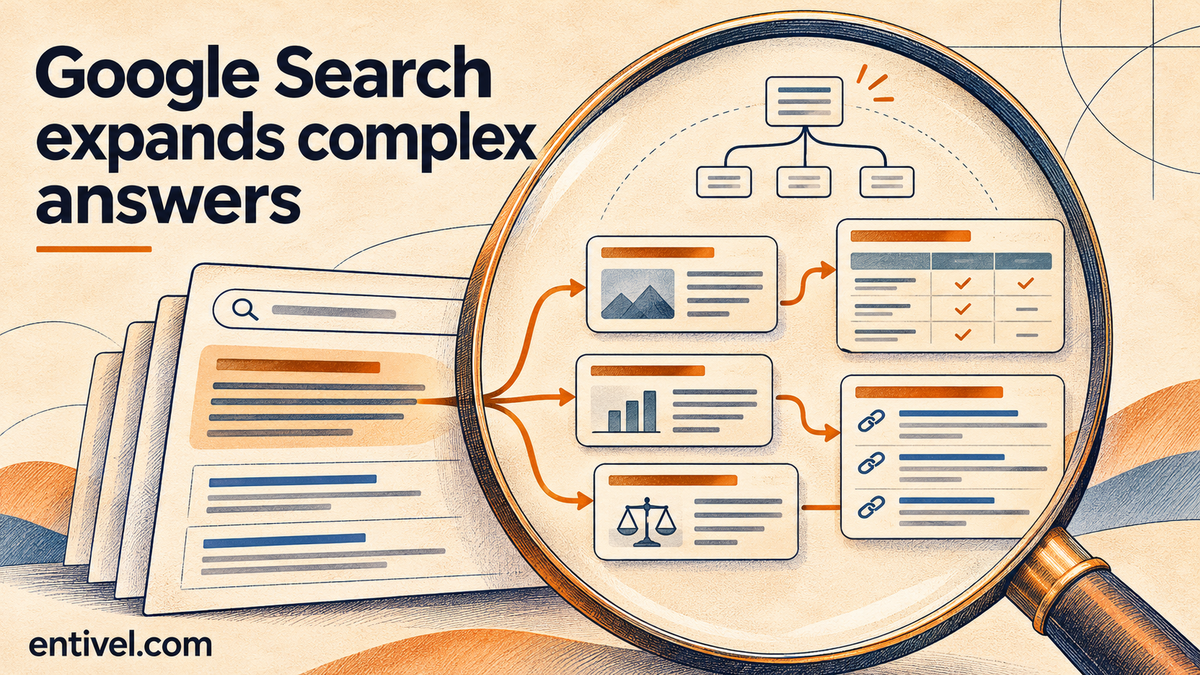
Google says a new model is expanding how Search handles complicated, multi-part questions. Its 12 November announcement describes Gemini 4 Hydrogen as a global upgrade that better interprets intent, runs related searches across subtopics and returns more structured, visual answers with links. Those are Google’s product claims, not an independent measurement of how often people will see or click those results.
The change matters to publishers because a single search may now be treated as several connected questions. Google says its query-fan-out approach can explore related topics at once and surface a broader set of relevant websites. That could create additional ways for useful pages to appear, while also making it harder to predict which page will be shown for a short keyword phrase. The announcement does not promise higher rankings, more traffic or a particular level of visibility for any site.
Google’s Search Central guidance says the existing foundations still apply to AI features: pages need to be crawlable and eligible for a search snippet; useful internal links, accessible text, relevant images and structured data that matches the visible page remain good practice. Google says there are no separate technical requirements or special markup to qualify for AI Overviews or AI Mode, and meeting the requirements does not guarantee that a page will be indexed or served. The guidance also says appearances in AI features are included in the overall “Web” search type in Search Console.
What website teams can do
For publishers and business sites, the practical response is to make each page answer a real question with enough context to be useful on its own. Explain the subject precisely, link to the underlying evidence, distinguish verified facts from interpretation, and keep technical details accessible to both people and crawlers. A collection of pages built only to repeat search phrases is unlikely to help readers compare, decide or verify anything.
Measurement should follow the same discipline. Teams can review impressions, clicks and search queries in Search Console’s Web report over time, while noting that one product announcement cannot predict the direction of their own traffic. Changes may vary by subject, language, device, query and market. Search visibility should be assessed from observed data, not assumed from model names or launch claims.
From Entivel
Entivel’s Workspace product is designed to connect enterprise people, finance, suppliers, procurement, production, inventory, distribution and governance through a shared operating context. It is a separate business product, not part of Google Search. For teams managing complex operations, clear access to relevant information is useful inside the organisation as well as across the public web. Learn about Entivel Workspace.
Sources
Questions about this story? Request a correction or send feedback.