
The current pace of technological change suggests one thing with absolute certainty: Artificial Intelligence is no longer an experimental capability; it is becoming operational infrastructure. From content generation and predictive analytics to supply chain optimization, AI tools promise exponential leaps in efficiency for businesses of all sizes. Industry projections suggest that by year's end, a significant majority of small to medium enterprises will have integrated AI into their core marketing and business functions. This trend highlights the undeniable value proposition: AI drastically reduces operational friction and accelerates growth.
However, this rapid acceleration toward 'AI adoption' often creates a dangerous blind spot. The focus remains overwhelmingly on the efficiency gains,the impressive content generated or the optimized campaign run,while the foundational layer of security and governance is treated as an afterthought. For SMBs navigating complex global compliance frameworks, simply integrating AI tools without understanding their underlying data flow risks creating exposure points far greater than the benefits they provide.
From Efficiency Gains to Enterprise Risk: The Governance Gap
For a business owner or technology strategist, the appeal of off-the-shelf AI solutions is overwhelming. They promise hyper-personalization at scale and marketing content that would traditionally require teams of specialists. These tools democratize high-level capabilities, allowing smaller organizations to compete with much larger market players. The initial hurdle,understanding how to use the tool,is quickly overcome by readily available guides and integrated APIs.
But beneath the surface of smooth user interfaces lies a complex interaction between proprietary data sets, third-party cloud compute resources, and increasingly sophisticated attack vectors. When an organization feeds sensitive customer records, intellectual property, or even internal operational metrics into a general-purpose AI model, they are making several critical assumptions about privacy, retention, and security that may not hold true.
This is where the pivot must occur: The conversation must shift from 'Can we use AI?' to 'How safely can we operate with AI?' To treat AI as merely an efficiency layer, rather than a core system of record, exposes businesses to systemic risk. The cost of inaction,a data breach or regulatory fine,dwarfs the initial investment in governance.
The Specific Vulnerabilities of Unsecured AI Integration
SMBs often rely on easily accessible, pay-as-you-go SaaS models for their AI needs. While convenient, these tools present several specific cybersecurity and compliance vulnerabilities that require expert management:
Data Leakage and Privacy Breaches
The most immediate risk is data leakage. When proprietary business data or sensitive customer PII (Personally Identifiable Information) are used to 'train' or prompt external, non-vetted AI models, that data may be inadvertently ingested into the model’s training set. This means the information ceases to belong solely to the company and becomes part of a larger, less controlled pool. For organizations subject to global mandates like GDPR in Europe or strict privacy laws domestically, this constitutes an immediate compliance failure.
Compliance Gaps: A Global Headache
Compliance is not static; it requires active management. Many AI tools operate globally but fail to account for regional data residency requirements or sector-specific regulations (e.g., financial services or healthcare). An SMB that uses a generic international marketing AI tool might be compliant with general privacy principles, yet fundamentally non-compliant regarding where specific user data must physically reside or how long it can be retained.
Advanced Threats: Prompt Injection and Model Manipulation
Beyond simple data leakage are sophisticated cyber threats. Prompt injection is a critical vulnerability where malicious actors manipulate the input (the prompt) to make the AI model bypass its intended security guardrails. For instance, an attacker could inject hidden commands into a seemingly innocuous marketing query, causing the AI system to reveal confidential information or execute unauthorized actions within the connected business workflow.
The Solution: Building a Secure and Governed AI Ecosystem
Maximizing the power of generative AI requires implementing security controls that treat the AI layer not as an application, but as a mission-critical data processor. This necessitates moving beyond simple endpoint protection and adopting comprehensive governance layers.
A mature approach to AI integration, exemplified by robust business technology providers, focuses on three pillars:
- Data Sanitization and Segmentation: Implementing protocols that scrub sensitive PII before data is passed to any external AI endpoint. This ensures the model receives only generalized or anonymized data necessary for the specific task, mitigating leakage risk.
- Compliance Mapping Layering: Integrating compliance checks directly into the AI workflow. The system must automatically flag and halt processes if the intended action violates established jurisdictional rules (e.g., flagging cross-border transfers of protected health information).
- API Gateway Security: Treating every connection point to an external AI model as a potential attack vector. This involves rigorous authentication, rate limiting, and continuous monitoring for signs of prompt injection or unexpected data outflow.
For international SMBs, the goal is not to restrict AI usage but to build guardrails that allow maximum innovation within minimum risk parameters. It requires a strategic shift from purchasing individual ‘AI tools’ to deploying an integrated 'Secure AI Automation Platform.' This platform acts as the necessary security wrapper and compliance engine, allowing businesses to harness efficiency gains without compromising their fundamental data integrity or regulatory standing.
Ultimately, the success of AI in business is not measured by the volume of content generated or the speed of the automation achieved. It is measured by the sustainable, compliant, and secure way that growth is achieved. For organizations looking to capitalize on the inevitable AI wave, understanding this critical difference,between simple adoption and governed implementation,is the most valuable strategic asset they can acquire today.
How Entivel can help
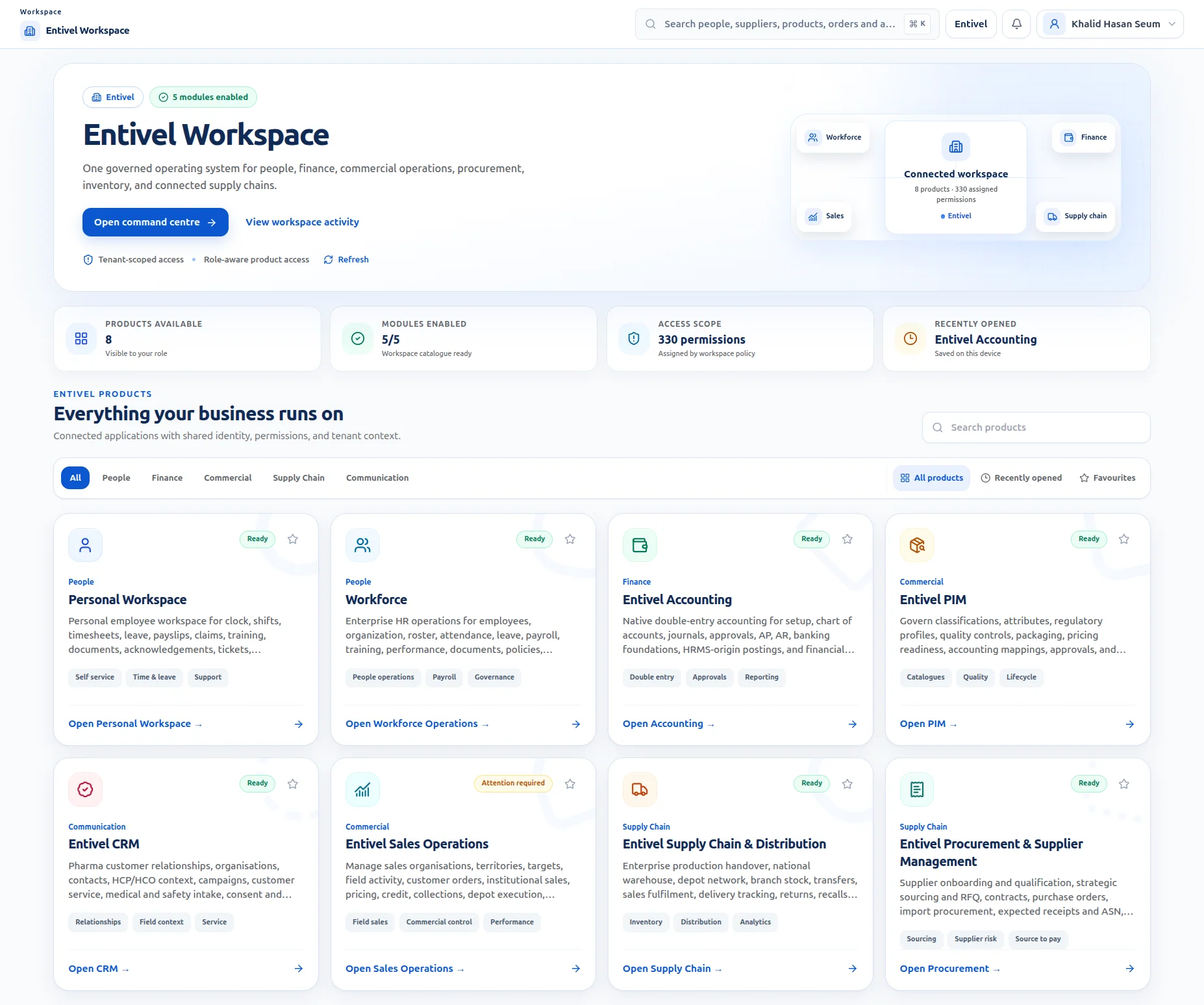
Entivel helps businesses identify manual workflows that can be automated with secure AI-powered systems. Learn more at https://entivel.com.