
The conversation around Artificial Intelligence (AI) has long centered on the massive corporations that can afford to build proprietary models and deploy armies of data scientists. However, recent analysis, particularly from industry thought leaders like Joe Lonsdale, is fundamentally shifting this narrative. The prevailing message is clear: AI’s most powerful impact is its ability to democratize advanced business capability. For international small and medium enterprises (SMEs), this means the competitive landscape has changed overnight. AI is no longer a luxury tool for giants; it is rapidly becoming foundational infrastructure for global growth, offering unprecedented operational leverage regardless of initial capital.
The Shift in Focus: What Lonsdale's Insights Reveal
Joe Lonsdale’s discussion on AI and small business growth encapsulates this shift. Historically, scaling a successful enterprise required massive investment in specialized departments,dedicated marketing teams, complex data analytics units, or comprehensive IT security infrastructure. These resources were often prohibitive for SMEs attempting to enter foreign markets or scale beyond local capacity. The current wave of generative and predictive AI tools is changing the cost structure of expertise.
What we are observing is not simply an improvement in technology; it is a radical compression of the knowledge worker’s required skillset. Modern platforms provide sophisticated automation capabilities,from drafting complex legal documents to optimizing international supply chains and managing multi-lingual customer support,all accessible via subscription models affordable to even the smallest operation. These tools automate processes that previously necessitated hiring multiple full-time employees, allowing core teams in SMEs to achieve a level of operational complexity once reserved for multinational corporations.
Why This Technological Democratization Matters Globally
The implications of this accessibility are profound and extend far beyond simple cost savings. For international businesses, the significance lies in three areas: market reach, competitive parity, and resilience. Previously, a small business seeking to establish itself in a new geographic market had to contend with established local players who benefited from decades of infrastructure investment. AI changes that dynamic by leveling the playing field.
- Global Market Penetration: AI-powered translation and localization tools allow SMEs to instantly adapt their marketing materials, product interfaces, and customer service flows for dozens of languages. This capability minimizes the time and cost associated with international expansion, enabling businesses to test multiple global markets simultaneously from a central hub.
- Optimized Operations and Efficiency: AI excels at pattern recognition in vast datasets,a task that is resource-intensive for human teams. SMEs can now use predictive analytics tools to forecast inventory needs, anticipate supply chain disruptions, or optimize energy consumption with high accuracy. This level of operational foresight reduces waste and improves margins, which are critical survival metrics for growing international firms.
- Cybersecurity Parity: As businesses become more globally connected, their attack surface expands dramatically. For SMEs, maintaining robust cybersecurity was once a budget drain. Modern AI-driven security platforms offer proactive threat detection and automated response protocols that provide enterprise-grade protection previously out of reach, allowing smaller firms to handle international data transfers with confidence and compliance.
In essence, the competitive advantage is no longer solely defined by physical assets or decades of accumulated capital; it is increasingly determined by the strategic adoption and integration of intelligent automation.
A Strategic Roadmap: What International SMEs Must Do Next
The availability of powerful AI tools presents an opportunity, but also a risk. Over-reliance on hype, or simply adopting tools without proper process overhaul, can lead to inefficiency rather than growth. For international businesses looking to capitalize on this shift, the focus must move from buying technology to implementing strategic operational transformation.
The next phase of AI integration requires SMEs to adopt a methodical approach:
1. Audit and Identify Bottlenecks:
Before selecting any tool, businesses must conduct a rigorous internal audit. Where does the team currently spend time on repetitive, rule-based tasks? Is it data entry, initial customer triage, or generating basic reports? These are the prime candidates for automation. The goal is not to automate everything, but to eliminate bottlenecks that artificially constrain growth.
2. Prioritize Foundational AI Pillars:
Instead of scattering resources across dozens of niche tools, focus on integrating core AI capabilities into foundational areas:
- Customer Relationship Management (CRM): Implementing AI to analyze customer sentiment in real time and route complex inquiries instantly improves satisfaction and retention.
- Back Office Automation: Using Robotic Process Automation (RPA) combined with AI for financial reconciliation, invoicing, and compliance checks drastically reduces manual errors and speeds up cash cycles across borders.
- Knowledge Management: Creating centralized, AI-indexed internal knowledge bases ensures that institutional expertise is captured and instantly available to new hires or remote teams anywhere in the world.
3. Invest in Human Upskilling:
The most overlooked aspect of AI adoption is the workforce itself. Automation does not replace humans; it redefines their role. Employees must transition from being task executors to becoming 'AI orchestrators',people who manage, audit, and fine-tune automated processes. Investing in training that focuses on prompt engineering, data interpretation, and strategic thinking ensures that the human capital remains the most valuable asset.
In conclusion, Joe Lonsdale’s perspective serves as a crucial wake-up call for global businesses: AI has lowered the barrier to entry for world-class operational efficiency. For international SMEs, success will belong not just to those who adopt AI, but to those who strategically integrate it into their core processes, viewing automation not as an expense, but as the ultimate multiplier of human potential and market reach.
How Entivel can help
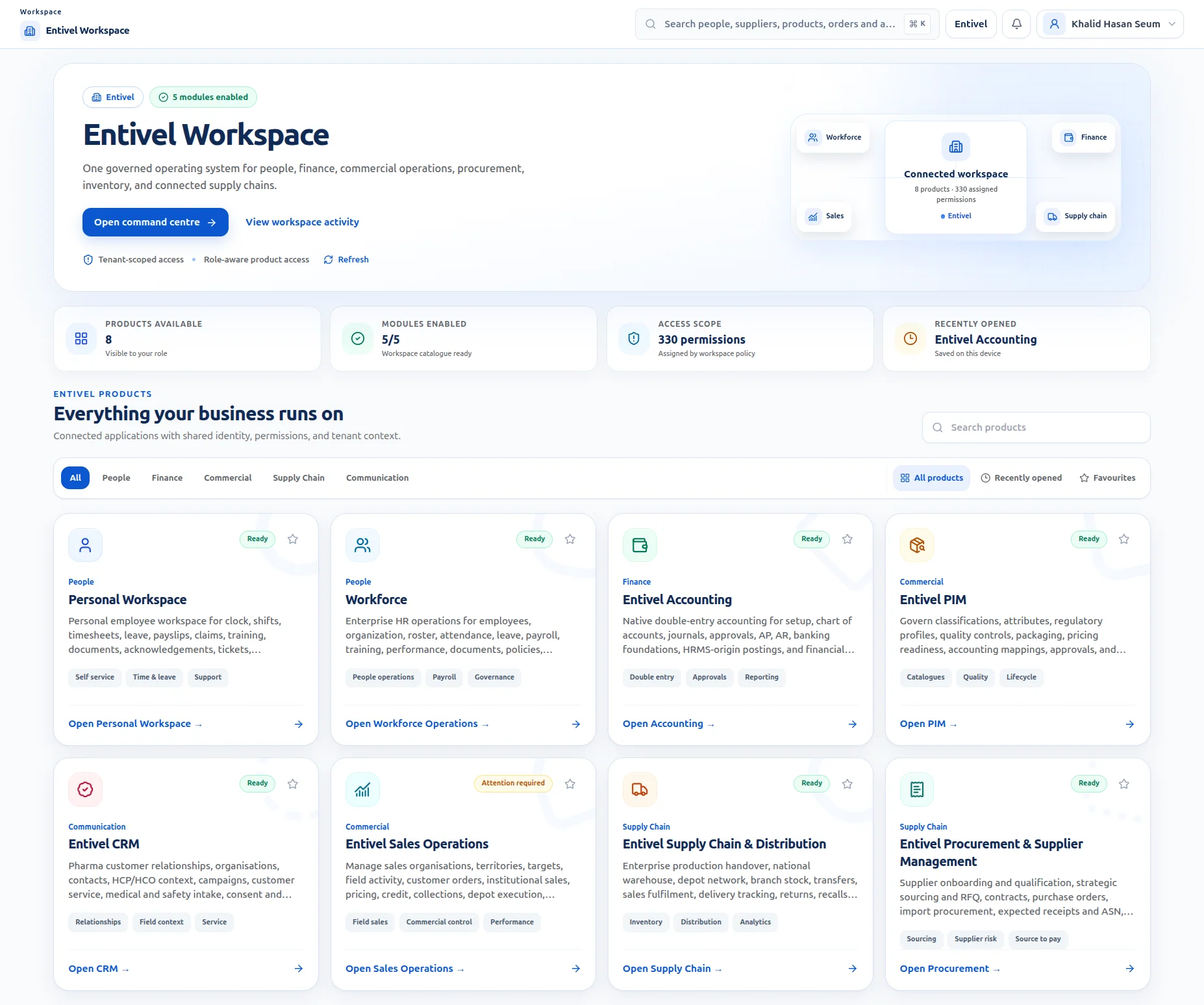
Entivel helps businesses identify manual workflows that can be automated with secure AI-powered systems. Learn more at https://entivel.com.