
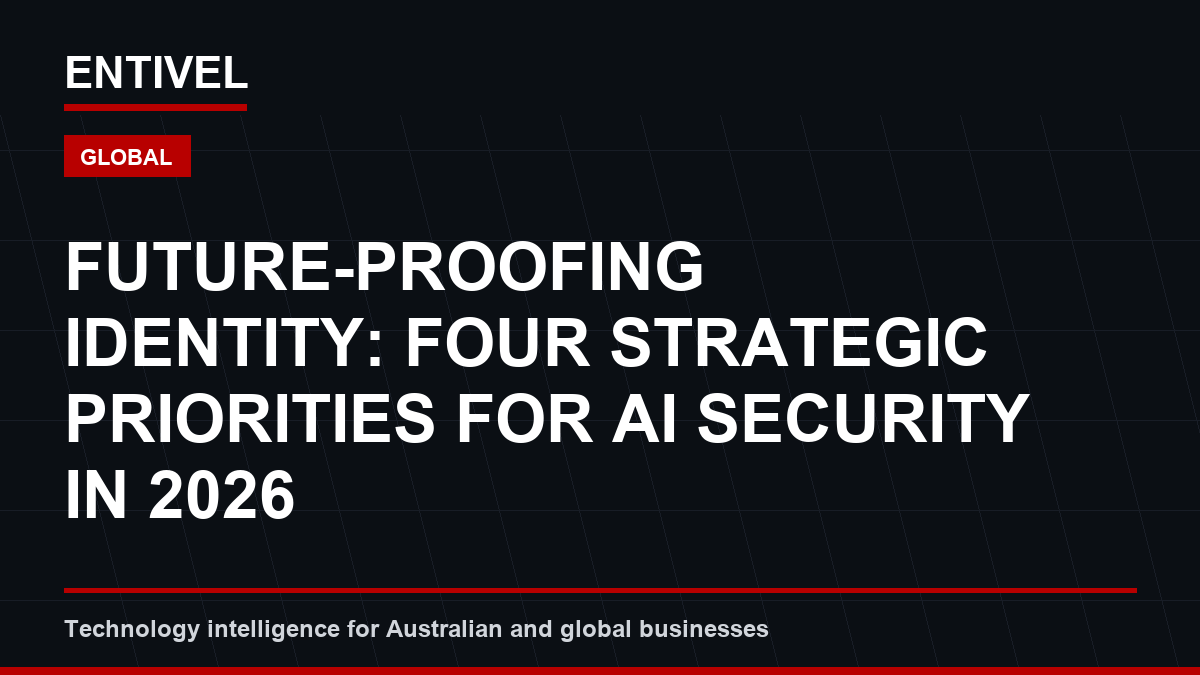
The integration of generative artificial intelligence into core business processes represents a monumental leap in operational efficiency. However, this rapid adoption simultaneously widens the attack surface, rendering traditional network perimeter defenses obsolete. Security teams globally are recognizing that protecting data and access requires a fundamental pivot toward identity itself. As major technology providers map out security roadmaps for 2026, the focus is crystal clear: AI-powered identity and access management (IAM) must become the bedrock of enterprise resilience. For Australian businesses looking to future-proof their critical infrastructure, understanding these predictive shifts is not optional,it is a strategic imperative.
The Evolution from Perimeter Defense to Identity Zero Trust
Historically, security architecture relied on building strong outer walls: firewalls and VPNs that defined the corporate perimeter. While effective in simpler IT environments, modern workforces are distributed, data flows through cloud services, and third-party vendors operate outside the traditional boundary. This reality necessitates a complete paradigm shift to Zero Trust Architecture (ZTA). ZTA dictates that no user, device, or service,whether inside the network or accessing it remotely,should be automatically trusted. Instead, every access attempt must be authenticated, authorized, and continuously validated.
The inclusion of AI dramatically enhances this model. It moves IAM beyond simple username-password authentication. Modern ZTA integrates behavioral biometrics, real-time risk scoring, and machine learning to assess the context of an access request,is this user behaving normally? Is the device patched? What is the typical time or location for this activity? By making identity continuously verifiable rather than simply verified at login, organizations can drastically reduce the window of opportunity for attackers.
Understanding the Four Key Predictive Priorities for 2026
The global security consensus points toward four major pillars that will define resilient enterprise access frameworks by 2026. These priorities demand a shift from reactive defense to predictive risk mitigation:
- Continuous Identity Validation: The concept of 'one-time' authentication is retiring. Security must now be continuous, meaning identity and device posture are assessed throughout the entire session. Any deviation,a sudden change in location, an unusual data download volume, or a shift in typing rhythm,triggers immediate re-authentication or access denial.
- AI Governance and Policy Enforcement: As AI becomes integral to business operations (e.g., drafting code, analyzing legal documents), the security challenge shifts from preventing unauthorized entry to governing authorized usage. Enterprises must implement granular policies that track who used which generative AI tool, how it was prompted, and whether the resulting data output contained proprietary or sensitive information.
- Behavioral Anomaly Detection: Next-generation security relies heavily on machine learning models trained on baseline user behavior. Instead of looking for known malware signatures, systems predict abnormal activity,such as a system administrator suddenly accessing HR records they never touch,and flag it before damage occurs. This is the core of predictive cybersecurity.
- Adaptive Network Access Controls: The network itself must become responsive to risk. If an endpoint device fails a real-time security check (e.g., insufficient patching, detection of suspicious processes), the system doesn't just block access,it *adapts* by limiting the scope of connection, perhaps allowing only read-only access to a specific subsystem until remediation is complete.
Actionable Strategy: Auditing Your Identity Infrastructure Today
For Australian enterprises, translating these global predictions into local action requires rigorous internal auditing. The goal is not simply to purchase new security tools, but to audit the underlying identity workflows and governance policies that govern data access.
Organizations must ask critical questions of their current IAM infrastructure:
- Are we treating all users equally? Does our system differentiate between a fully managed corporate device used by an employee in Sydney versus a personal mobile phone connecting from a coffee shop? If not, the architecture lacks necessary granularity.
- Is access based on role or real-time need? Are permissions static (e.g., 'Marketing Manager' always has X rights) or are they dynamic (e.g., 'Access granted to Marketing data only between 9 am and 5 pm when connected from a verified office IP')?
- How quickly can we revoke access? In the event of an employee termination or device loss, how automated is the process of de-provisioning access across all cloud services, internal applications, and physical network entry points? Manual steps introduce unacceptable risk.
Addressing these gaps proactively ensures that when the next wave of AI threats emerges, the enterprise has built-in controls designed for continuous validation.
Integrating Automation: Minimizing Manual Risk in NAC
The final pillar of future-proofing is automation. Manually managing complex identity policies across hybrid cloud environments is prone to human error,the single greatest risk factor in cybersecurity. The integration of AI into Network Access Controls (NAC) must therefore be automated and continuous.
Practical steps for integrating this level of automation include:
- Establishing Single Source of Truth: All identity data, user attributes, device health records, and policy definitions must feed from a single, central authoritative source. This prevents policy drift and ensures that when one system updates an employee's status, all connected security systems recognize it instantly.
- Implementing Automated Remediation Workflows: Instead of generating alerts for IT staff to manually follow up on compromised devices, the NAC system should be programmed to automatically initiate remediation. For instance, if a device is detected running outdated operating software, the system automatically quarantines the network port and notifies the user via an approved channel until patching is complete.
- AI-Driven Policy Optimization: Utilizing AI tools to analyze historical access logs can identify 'security debt',unused permissions or over-privileged accounts that are no longer necessary because job roles have changed. This proactive cleaning of entitlements reduces the attack surface dramatically without impacting legitimate business operations.
Conclusion
The trajectory for enterprise security is clear: identity, not location, is the new perimeter. By 2026, organizations must move beyond simply detecting threats and embrace predictive access control. For Australian businesses navigating this landscape, adopting AI-powered Zero Trust principles,focusing on continuous validation, granular governance of AI usage, behavioral modeling, and deep automation,is the most reliable strategy for maintaining operational continuity against increasingly sophisticated global cyber adversaries.
How Entivel can help
Entivel helps businesses review website security, access control, cloud exposure and software risk before small issues become expensive incidents. Learn more at https://entivel.com.