
The modern digital economy presents small and medium businesses (SMBs) with unparalleled growth opportunities, but it also exposes them to a rapidly escalating threat landscape. While global cybersecurity vendors offer sophisticated, enterprise-grade tools designed for multinational corporations, these solutions are often prohibitively complex, expensive, or resource-intensive for smaller operations. This creates a critical security gap: SMBs need the defenses of a Fortune 500 company but possess the budget and internal IT staff of a local business. The solution is shifting from simply 'buying' technology to strategically implementing automated, localized solutions that elevate risk posture without requiring massive capital investment.
The Critical Gap: Complexity vs. Capability
Most SMB security planning still operates on an outdated model: if you can afford it, you should buy it. This approach fails because modern cyber threats are rarely solved by simply stacking point solutions. Advanced persistent threats (APTs) and sophisticated ransomware campaigns require continuous monitoring, proactive threat hunting, and integrated governance frameworks,the hallmarks of enterprise defense. For a small business owner or IT manager, keeping up with the required compliance standards across multiple jurisdictions while simultaneously managing day-to-day operations is nearly impossible.
The fundamental problem is not lack of awareness; it is a severe gap in actionable implementation capacity. A local business may understand that Multi-Factor Authentication (MFA) is necessary, but they often lack the expertise to correctly deploy MFA across every single service, manage exceptions, or integrate it with their existing cloud infrastructure without creating new operational vulnerabilities. The sheer complexity of managing integrated security stacks becomes a paralyzing barrier.
Shifting Focus: From Product Purchase to Automated Strategy
The industry paradigm is rapidly pivoting away from product sales toward service integration and automated risk reduction. This shift is driven by the recognition that true cyber resilience comes not from having the most expensive firewall, but from having the most optimized workflow. This is where AI and automation become indispensable.
Artificial intelligence changes the game by automating the monotonous, time-consuming tasks that usually require a dedicated security team: threat detection, log analysis, patch management prioritization, and vulnerability scanning. Instead of requiring staff to manually sift through millions of lines of network logs searching for anomalies,a task only feasible for large Security Operations Centers (SOCs),AI platforms ingest this data, correlate suspicious events, and flag potential breaches with high confidence levels.
For an SMB, the benefit is twofold: first, they gain access to threat detection capabilities previously reserved for global giants. Second, automation drastically lowers the operational overhead. A system that automatically patches a vulnerability the moment it's detected, or one that isolates a compromised endpoint before human intervention is possible, provides instant enterprise-grade protection without requiring continuous 24/7 staffing.
The Necessity of Local Expertise: Tailoring Global Best Practices
While global AI tools are powerful, they are often 'one size fits all.' A major challenge for international SMBs is the need to reconcile generic global best practices with hyper-local regulatory requirements. An Australian business, for example, must navigate specific data residency laws, local consumer protection mandates, and unique industrial compliance standards that a purely off-the-shelf solution will overlook.
This is where the role of knowledgeable, localized technology partners becomes mission critical. Local expertise acts as the crucial bridge: it takes sophisticated, global AI engines,which provide the 'what' (e.g., detect unusual data transfer),and overlays local knowledge to determine the 'how' and the 'why.' This involves customizing deployment strategies to meet specific regional compliance frameworks, ensuring that security measures are not only effective but also legally sound for their operational footprint.
A localized partner understands the unique workflow of a small manufacturing firm versus a professional services provider. They can architect an automated security solution that integrates seamlessly with existing local business software,whether it's specific payroll systems or regional cloud providers,ensuring maximum adoption and minimal disruption, which is paramount for maintaining operational continuity.
A Framework for Action: Assessing Your Security Posture
For SMB leaders looking to move beyond reactive security measures, a structured assessment framework is the most valuable first step. Instead of asking, “What tool do I need?” ask, “Where are my biggest operational risks, and how can automation mitigate them?”
Here is an actionable three-step guide for assessing your current cybersecurity readiness:
1. Map Critical Data Flows
Identify every system that handles sensitive data: customer personal information (PII), financial records, intellectual property, and employee credentials. Trace exactly how this data moves across networks, between cloud services, and into physical devices. The weakness in your chain,the weakest link or the most complex transfer point,is where an attacker will strike first.
2. Inventory Automation Gaps
For each critical flow identified, ask: “What manual step introduces risk?” If a process requires an employee to manually download and run a file from an email attachment, that is a high-risk human touchpoint. If user access permissions are managed through disparate systems (e.g., one system for HR, another for the CRM), that is a governance gap. Automation should target these manual handoffs.
3. Prioritize Automated Controls
Based on your gaps, prioritize controls that offer high protective value with low operational complexity. Focus areas include: automated patch management across all endpoints; continuous access review to ensure former employees or department changes automatically revoke old permissions; and AI-driven network monitoring that alerts staff only when a deviation from normal baseline behavior occurs.
By adopting this approach, SMBs shift their mindset from simply reacting to threats (firefighting) to proactively engineering resilience. They move from paying for boxes of software to investing in integrated intelligence that protects the core business function itself.
How Entivel can help
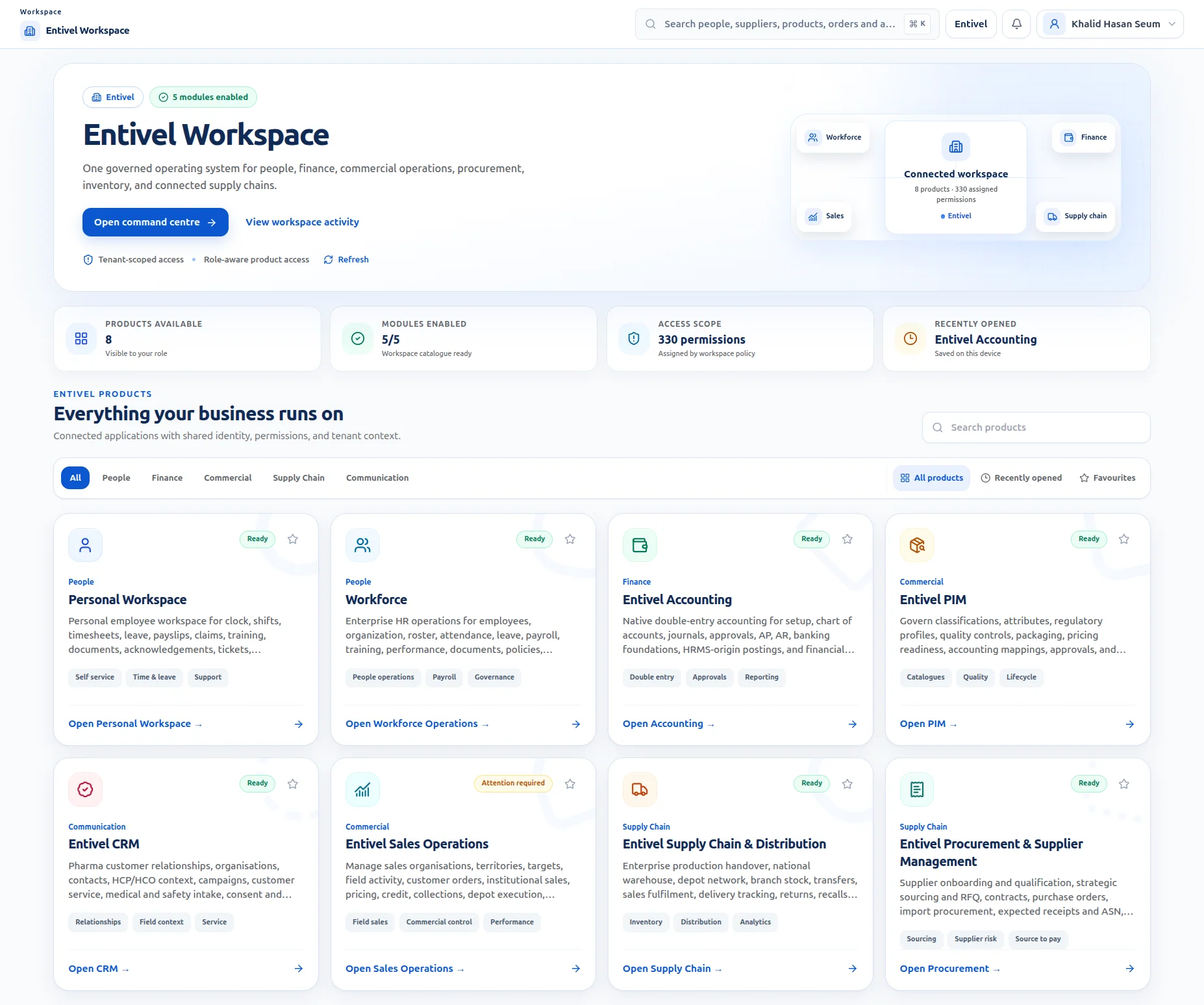
Entivel helps businesses review website security, access control, cloud exposure and software risk before small issues become expensive incidents. Learn more at https://entivel.com.