
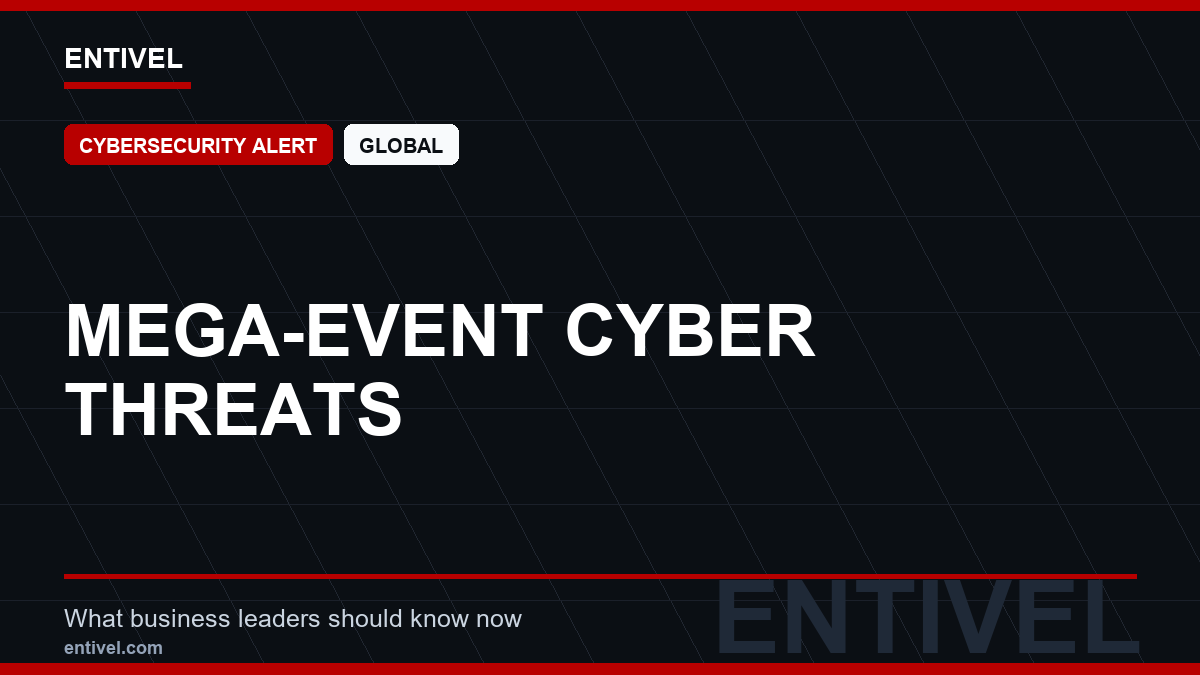
The world loves major sporting events. They bring excitement, massive tourism booms, and temporary economic spikes. But beneath the fanfare of global gatherings like a World Cup lies an escalating digital threat landscape. These large-scale international events do not just stress physical infrastructure; they create colossal, temporary attack surfaces for cybercriminals.
TL;DR: Global mega-events are prime targets for cyberattacks due to their complexity and temporary vendor sprawl. Businesses must move beyond basic firewalls by implementing robust Business Continuity Plans (BCP), stress-testing supply chain vulnerabilities, and integrating proactive AI threat detection systems to ensure true cybersecurity for business Australia.
The Anatomy of Global Cyber Risk: Why Mega-Events Matter
When millions of people gather across dozens of jurisdictions, the digital footprint expands exponentially. Every ticketing system, every local vendor Wi-Fi network, every media partner platform,each is a potential point of entry for malicious actors.
The threat isn't just about attacking the main venue; it’s about what we call the 'ripple effect.' A cyberattack doesn't need to target your company directly. It can originate at a single, seemingly innocuous third-party vendor,a local catering service that manages payment processing, or a small logistics partner handling inventory.
For Australian SMBs and enterprises alike, this means understanding the depth of your supply chain risk. A breach at one critical link in your operational chain can compromise client data, halt physical operations, and severely damage reputation, regardless of how strong your internal defenses are. This is why proactive business cybersecurity Australia must adopt a systemic view of risk.
Stress-Testing Resilience: Beyond the Firewall
The goal of modern security planning isn't simply preventing breaches; it’s ensuring business continuity when prevention fails. We need to stress-test our systems against 'Black Swan' scenarios,the high-impact, low-probability events that could shut down operations.
Focus Area 1: Supply Chain Vulnerabilities
The most significant risk exposed by global events is the interconnectedness of modern business. If your operational software relies on a third-party API or cloud service that suffers an outage or breach, your entire process grinds to a halt.
- Actionable Step: Mandate regular audits of all critical vendors. Understand their security protocols and ask specific questions about their incident response plans.
- Goal: Identify single points of failure (SPOFs) in your technology stack before they are exploited by cybercriminals.
Focus Area 2: The Rise of AI-Driven Attacks
The same powerful AI tools that automate business processes also enable sophisticated attackers to perform highly personalized, undetectable attacks,such as deepfake phishing campaigns or rapid exploitation of zero-day vulnerabilities.
To maintain strong data breach protection Australia, organizations must integrate defensive AI. This means moving past signature-based detection and adopting behavioral analytics that flag anomalous activity in real time,a capability crucial for modern cybersecurity for business Australia.
Practical Tips by Category
Implementing comprehensive security doesn't require an overnight overhaul, but it does require continuous planning and investment. Here are targeted steps to improve your resilience:
🛡️ Cybersecurity Tips
Prioritize identity management. Implement Multi-Factor Authentication (MFA) everywhere possible, especially for remote access and cloud services. Conduct a thorough access control review to ensure employees only have the minimum permissions necessary to do their jobs.
☁️ Cloud Tips
Never treat cloud security as an afterthought. Implement robust identity and access management (IAM) policies across all cloud environments, ensuring data residency compliance and encrypting sensitive data both in transit and at rest.
💻 Website Tips
Schedule a comprehensive website security review Australia annually. This should cover penetration testing, patch management for CMS platforms, and DDoS mitigation services to ensure continuous availability during high-traffic periods.
Entivel Perspective: Turning Global Risk Into Safer Growth
The World Cup scenario serves as a powerful reminder that cybersecurity is not an IT department problem; it is a core business risk that affects profit margins, reputation, and operational stability. Effective security improvement planning requires bridging the gap between physical resilience (Business Continuity Planning) and digital defense.
At Entivel, we specialize in helping businesses navigate this complexity. We integrate advanced AI automation into core cybersecurity frameworks, allowing Australian SMBs to move from reactive damage control to proactive risk mitigation. Our solutions are designed to:
- Automate Threat Detection: Deploying AI-driven systems that monitor behavioral anomalies across your entire digital estate, catching threats before human intervention is needed.
- Strengthen the Supply Chain: Providing secure digital wrappers around third-party integrations, ensuring vendor risk doesn't become your business risk.
- Build Resilient Operations: Developing bespoke Business Continuity Plans that are tested against catastrophic 'Black Swan' event scenarios, guaranteeing operational uptime when it matters most.
Don't wait for the next global mega-event or the next headline to dictate your security strategy. By adopting a holistic approach to cybersecurity for business Australia, you ensure that disruption becomes merely an operational hurdle, not an existential threat.
Ready to stress-test your current digital defenses and build true resilience? Learn how Entivel can secure your growth trajectory. Visit us today to schedule a comprehensive security assessment.
How Entivel can help
Entivel helps businesses review website security, access control, cloud exposure and software risk before small issues become expensive incidents. Learn more at https://entivel.com.