Maduro Arrest Story Used to Spread Dangerous Backdoor Malware

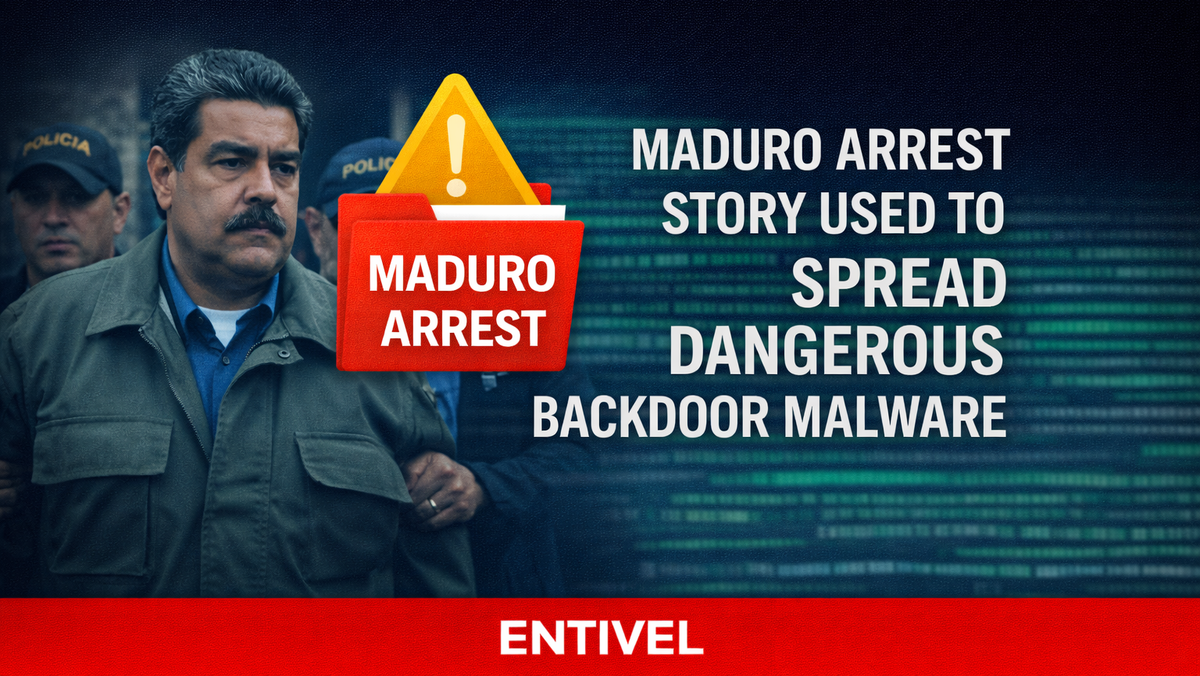
Cybercriminals have leveraged reports surrounding the arrest of Venezuelan President Nicolás Maduro to distribute sophisticated backdoor malware in a targeted phishing campaign, security researchers say.
The operation uses a high-profile geopolitical event as social engineering bait to trick recipients into executing malicious software, illustrating how ongoing world news continues to be exploited as an effective lure in large-scale cyber campaigns.
Malicious Email and Payload Delivery
According to cybersecurity analyses, the campaign begins with spear-phishing emails that reference Maduro’s reported arrest, containing a compressed archive titled “US now deciding what’s next for Venezuela.zip.”
Inside the archive are two key components: an executable file with a misleading name and a dynamic-link library (DLL) that has been weaponised. Researchers note the executable is a legitimate binary repurposed through DLL hijacking, a technique that loads the malicious library when the program runs.
Backdoor Malware and Persistence
Once executed, the malware creates directories on the victim’s system, copies itself, and modifies registry keys to maintain persistence, then establishes secure communications with a command-and-control (C2) server.
Security experts warn that this type of backdoor access enables attackers to move laterally within networks, exfiltrate data, and deploy additional payloads — all while evading basic detection mechanisms.
Threat Actors Use World Events as Bait
Researchers highlighted that opportunistic attackers frequently exploit ongoing world events to lend credibility to phishing content, increasing the likelihood that recipients will open malicious files.
This approach draws on heightened public interest and media coverage, making it difficult for targets to distinguish legitimate communications from malicious ones.
Broader Implications for Security Teams
Security analysts say the campaign underscores the need for organisations to maintain robust email security protocols, advanced phishing detection capabilities, and up-to-date training for users who may receive seemingly news-related attachments.
As threat actors continue to integrate real-time geopolitical developments into cyberattack frameworks, defenders must remain vigilant against increasingly plausible social engineering tactics.
About Entivel
Entivel develops secure websites, web applications, and custom software solutions, providing cybersecurity, penetration testing, and web application security services for organisations facing advanced phishing and malware threats.